
Asoka / Ashok
Saraca indica
- Found in India
- Uttar Pradesh, Maharashtra, Karnataka & more
How to identify Asoka
Identify Asoka by combining habit, leaf characters, flower or fruit details, location, and its family pattern. Do not rely on one feature alone.
- Check the distinctive field mark: Dense clusters of orange-red flowers, often used interchangeably with S. asoca.
- Confirm leaf type: Pinnately compound.
- Confirm leaf shape: Lanceolate.
- Confirm flower colour: Orange.
- Confirm flower arrangement: Corymb.
- In India, compare location records such as Uttar Pradesh, Maharashtra, Karnataka, Tamil Nadu and nearby regions.
- Confirm it sits within the Caesalpiniaceae family pattern, then compare close relatives before deciding it is Asoka.
Plant Details
- Scientific name
- Saraca indica
- Genus
- Saraca
- Family
- Caesalpiniaceae
- Found in India
- Uttar Pradesh, Maharashtra, Karnataka, Tamil Nadu, Andhra Pradesh, Assam, Gujarat, Kerala, Delhi
- Conservation status
- Not Evaluated (NE)
Leaf characters
- Leaf type
- Pinnately compoundrecordedLeaflets are arranged in rows along a central stalk, like a feather.“The leaves are compound and paripinnate, each leaf has 2–4, sometimes 1–7, pairs of leaflets along a 7–25-centimetre (2.8–9.8-inch), sometimes up to 35-centimetre (14-inch), rachis” — Wikipedia, CC BY-SA 4.0
- Leaf shape
- LanceolaterecordedLong and narrow, tapering to a point, like a lance head.“Leaflets may be elliptic to lanceolate in shape;” — Wikipedia, CC BY-SA 4.0
- Leaf margin
- UndulaterecordedA wavy, rippled edge.“It exhibits symmetrical pyramidal growth with willowy weeping pendulous branches and long narrow lanceolate leaves with undulate margins.” — Wikipedia, CC BY-SA 4.0
Typical of the family
- Arrangement
- Alternate
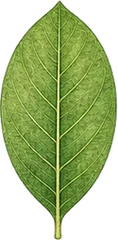
Characters marked “recorded” are for Asoka itself; the rest are typical of the Caesalpiniaceae family.
Flower & fruit characters
- Flower colour
- Orangerecorded
- Flower arrangement
- CorymbrecordedA flat-topped cluster where outer flower stalks are longer than inner ones.“Inflorescence is a 3–15-centimetre (1.2–5.9-inch) diameter corymb with slender branches, with apetalous, bisexual flowers with yellowish orange sepals.” — Wikipedia, CC BY-SA 4.0
Typical of the family
- Flower symmetry
- Zygomorphic (bilaterally symmetrical)
- Inflorescence
- Raceme
- Fruit
- Legume
Characters marked “recorded” are for Asoka itself; the rest are typical of the Caesalpiniaceae family — flowering plants only.
Local Names
- Hindi
- asoka, অশোক
- Sinhala
- දියරතඹල
About Asoka
Ashok (Saraca indica) belongs to the Caesalpiniaceae family. In India it has been recorded in Uttar Pradesh, Maharashtra, Karnataka and 6 other states.
Uses
Locally it is cut for timber and furniture and planted as an ornamental.
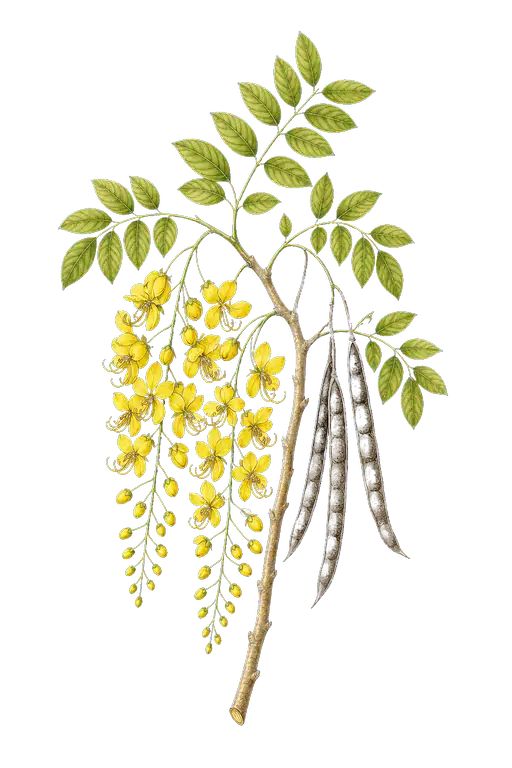
Caesalpiniaceae
Senna family
Asoka belongs to the Caesalpiniaceae family.
The illustration represents the family — not necessarily this exact species.
Explore the Caesalpiniaceae familySnap it. Know it.
Point your camera at Asoka or any plant and SASYA identifies it instantly — on-device, offline, and private.
Common plant problems
If you are starting from symptoms instead of a diagnosis, use the plant disease symptom checker to narrow the cause before treating.
All plant problem & care guides