
Zaitun / Olive
Olea europaea
- Habit
- Tree
- Found in India
- Himachal Pradesh, Punjab, Jammu & Kashmir & more
How to identify Zaitun
Identify Zaitun by combining habit, leaf characters, flower or fruit details, location, and its family pattern. Do not rely on one feature alone.
- Look for a tree habit.
- Check the distinctive field mark: Silvery-grey leaves; olive fruit.
- Confirm leaf shape: Oblong.
- Confirm flower colour: White.
- Confirm flower arrangement: Raceme.
- In India, compare location records such as Himachal Pradesh, Punjab, Jammu & Kashmir, Madhya Pradesh and nearby regions.
- Confirm it sits within the Oleaceae family pattern, then compare close relatives before deciding it is Zaitun.
Plant Details
- Scientific name
- Olea europaea
- Genus
- Olea
- Family
- Oleaceae
- Habit
- Tree
- Habitat
- Garden plant
- Habitat type
- Cultivated
- Native to
- Asia minor and Greece
- Found in India
- Himachal Pradesh, Punjab, Jammu & Kashmir, Madhya Pradesh, Uttarakhand
Leaf characters
- Leaf shape
- OblongrecordedLonger than wide with roughly parallel sides, the ends rounded.“The silvery green leaves are oblong, measuring 4–10 cm (1+1⁄2–4 in) long and 1–3 cm (1⁄2–1+1⁄4 in) wide.” — Wikipedia, CC BY-SA 4.0
Typical of the family
- Arrangement
- Opposite

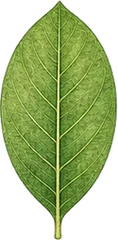
Characters marked “recorded” are for Zaitun itself; the rest are typical of the Oleaceae family.
Flower & fruit characters
- Flower colour
- Whiterecorded
- Flower arrangement
- RacemerecordedIndividual stalked flowers arranged along a central stem, opening from bottom to top.“Small, white flowers are borne generally on the previous year's wood, in racemes springing from .” — Wikipedia, CC BY-SA 4.0
- Fruit type
- DruperecordedA fleshy fruit with a single hard stone/pit enclosing the seed.“The fruit is a small drupe, 1–2.5 cm (3⁄8–1 in) long when ripe, thinner-fleshed and smaller in wild plants than in orchard cultivars.” — Wikipedia, CC BY-SA 4.0
Typical of the family
- Flower symmetry
- Actinomorphic (radially symmetrical)
- Inflorescence
- Panicle
- Fruit
- Drupe
Characters marked “recorded” are for Zaitun itself; the rest are typical of the Oleaceae family — flowering plants only.
Local Names
- Hindi
- ज़ैतून zaitun,जैतून jaitun
- Nepali
- जैतुन
- Bengali
- জয়তুন
- Tamil
- சைத்தூன், ஆலிவ், ஆலிவ் மரம்
- Kannada
- ಆಲಿವ್
- Malayalam
- ഒലിവ്, Olive, ഒലിവു മരം
- Marathi
- जैतून
About Zaitun
Olive (Olea europaea) belongs to the Oleaceae family, where it grows as a tree. In India it has been recorded in Himachal Pradesh, Punjab, Jammu & Kashmir and 2 other states. It grows in garden plant.
Uses
In practice it is grown for parts that are eaten, stripped for fibre used in rope and matting and used to deter insects.
In culture
It is treated as sacred and appears in worship and turns up in ritual and festival use.
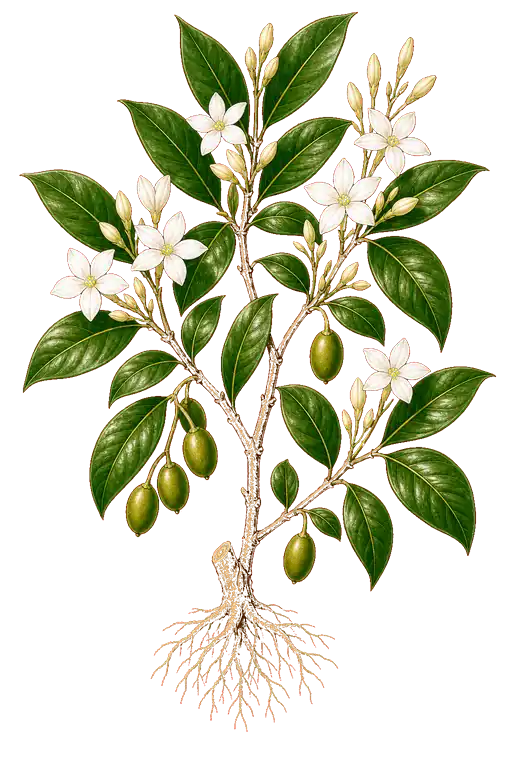
Oleaceae
Olive/Jasmine family
Zaitun belongs to the Oleaceae family.
The illustration represents the family — not necessarily this exact species.
Explore the Oleaceae familySnap it. Know it.
Point your camera at Zaitun or any plant and SASYA identifies it instantly — on-device, offline, and private.
Common plant problems
If you are starting from symptoms instead of a diagnosis, use the plant disease symptom checker to narrow the cause before treating.
All plant problem & care guides