

Typical of the Apocynaceae family
Ecology & growing context
- Native status · Kew WCVP
- WCVP native range does not include India Kew dataset ↗
Kew WCVP dataset; accepted-name match. Dataset matching is separate from an individual regional review. Recorded worldwide native range: Brazil (Rio de Janeiro). Not listed native does not establish introduction or absence from India.
- Explore nearby plants
- Browse plants by state →
Occurrence records show where a plant has been recorded; they do not establish that it is native there. Compare local habitat and growing conditions when choosing plants for a garden.
How to identify Mandevilla
Identify Mandevilla by combining habit, leaf characters, flower or fruit details, location, and its family pattern. Do not rely on one feature alone.
- Check the distinctive field mark: Popular ornamental flowering vine.
- Confirm leaf arrangement: Opposite.
- Confirm leaf shape: Ovate.
- Confirm flower colour: Pink.
- Confirm flower arrangement: Raceme.
- Confirm it sits within the Apocynaceae family pattern, then compare close relatives before deciding it is Mandevilla.
Plant Details
- Scientific name
- Mandevilla sanderi
- Genus
- Mandevilla
- Family
- Apocynaceae
- Conservation status
- Not Evaluated (NE)
Leaf characters
- Leaf arrangement
- OppositerecordedTwo leaves arise from the stem at the same point, facing each other.“The evergreen, petiolate, thick, leathery, dark green leaves are opposite, and grow to 6 cm (2.5 in) long.” — Wikipedia, CC BY-SA 4.0
- Leaf shape
- OvaterecordedEgg-shaped, broader near the base.“The blade is ovate-elliptical, 5–6 cm long, with a glossy upper surface and a thick epidermis.” — Wikipedia, CC BY-SA 4.0


Typical of the family



Characters marked “recorded” are for Mandevilla itself; the rest are typical of the Apocynaceae family.
Flower & fruit characters
- Flower colour
- Pinkrecorded
- Flower arrangement
- RacemerecordedIndividual stalked flowers arranged along a central stem, opening from bottom to top.“The inflorescences are simple racemes, usually terminal (sometimes axillary) that gather at a given moment, 3–4 pimples and a large blooming pink-red flower, 4–7 cm in diameter.” — Wikipedia, CC BY-SA 4.0
- Fruit type
- FolliclerecordedA dry pod that splits open along a single seam.“The fruit is dry, capsular, formed of two long follicles, and opens lengthwise like a silique.” — Wikipedia, CC BY-SA 4.0
Typical of the family
- Inflorescence
- Cyme
- Fruit
- Follicle


Characters marked “recorded” are for Mandevilla itself; the rest are typical of the Apocynaceae family — flowering plants only.
About Mandevilla
Mandevilla (Mandevilla sanderi) belongs to the Apocynaceae family.
Uses
Locally it is planted as an ornamental.

Apocynaceae
Dogbane family
Mandevilla belongs to the Apocynaceae family.
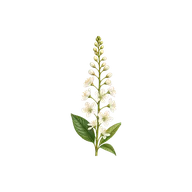
The illustration represents the family — not necessarily this exact species.
Explore the Apocynaceae familySnap it. Know it.
Point your camera at Mandevilla or any plant and SASYA identifies it instantly — on-device, offline, and private.
Common plant problems
If you are starting from symptoms instead of a diagnosis, use the plant disease symptom checker to narrow the cause before treating.
All plant problem & care guides