
Kamlata / Cypress Vine
Ipomoea quamoclit
Also known as Indian Pink, Cardinal Climber, Cupid's Flower, Cypressvine Morning-Glory, Red Jasmine, Star Of Bethlehem, Star-Glory, Sweet-Willy
- Habit
- Climber
- Found in India
- Kerala, Maharashtra, West Bengal & more
- Flowering
- July-January
How to identify Kamlata
Identify Kamlata by combining habit, leaf characters, flower or fruit details, location, and its family pattern. Do not rely on one feature alone.
- Look for a climber habit.
- Check the distinctive field mark: Fern-like feathery leaves with small red star flowers (cypress vine).
- Confirm leaf type: Pinnately compound.
- Confirm leaf shape: Finely divided/fern-like.
- Confirm flower colour: Red.
- In season, compare flowering and fruiting time: July-January.
- In India, compare location records such as Kerala, Maharashtra, West Bengal, Karnataka and nearby regions.
Plant Details
- Scientific name
- Ipomoea quamoclit
- Genus
- Ipomoea
- Family
- Convolvulaceae
- Habit
- Climber
- Habitat
- Garden plant
- Habitat type
- Cultivated
- Native to
- New World tropics
- Distribution
- New World tropics, Tropical Asia
- Found in India
- Kerala, Maharashtra, West Bengal, Karnataka, Telangana, Tamil Nadu, Uttarakhand, Andhra Pradesh, Assam, Rajasthan, Goa, Bihar, Chhattisgarh, Manipur, Puducherry, Gujarat, Himachal Pradesh, Madhya Pradesh, Mizoram, Odisha, Sikkim, Arunachal Pradesh, Daman & Diu, Delhi, Tripura, Uttar Pradesh
- Flowering & fruiting
- July-January
- Conservation status
- Not Evaluated (NE)
Leaf characters
- Leaf type
- Pinnately compoundrecordedLeaflets are arranged in rows along a central stalk, like a feather.“The leaves are 1–4 inches (25–102 mm) long, deeply lobed (nearly pinnate), with 9-19 lobes on each side of the leaf.” — Wikipedia, CC BY-SA 4.0
- Leaf shape
- Finely divided/fern-likerecorded
- Leaf margin
- LobedrecordedThe edge is divided into rounded or pointed sections that don't reach the midrib.“The leaves are 1–4 inches (25–102 mm) long, deeply lobed (nearly pinnate), with 9-19 lobes on each side of the leaf.” — Wikipedia, CC BY-SA 4.0

Typical of the family
- Arrangement
- Alternate
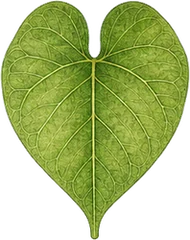
Characters marked “recorded” are for Kamlata itself; the rest are typical of the Convolvulaceae family.
Flower & fruit characters
- Flower colour
- Redrecorded
Typical of the family
- Flower symmetry
- Actinomorphic (radially symmetrical)
- Inflorescence
- Cyme
- Fruit
- Capsule
Characters marked “recorded” are for Kamlata itself; the rest are typical of the Convolvulaceae family — flowering plants only.
Local Names
- Hindi
- कामलता Kamlata,कामलता kamalata
- Nepali
- जयन्ती Jayantee, जयन्ती फूल
- Bengali
- কুংজ লতা Kunja lota, কুঞ্জলতা
- Tamil
- Mayilmannikkam, Kembumalligai, மயில் மாணிக்கம்
- Telugu
- కాశీ రత్నం Kaashi ratnam, కాశీరత్నం
- Kannada
- ಕಾಮನಬಳ್ಳಿ Kaamana balli, ಕಾಮಲತೆ Kaamalate, ಕಾಸಿರತ್ನ Kaasiratna
- Malayalam
- ആകാശമുല്ല Akasha-mulla, നാരായനീ പൂവു Narayani poovu, സൂര്യകാന്തീ Suriyakanthi
- Marathi
- गणेशवेल Ganeshvel, गणेशवेल
About Kamlata
Cypress Vine (Ipomoea quamoclit) belongs to the Convolvulaceae family, where it grows as a climber. In India it has been recorded in Kerala, Maharashtra, West Bengal and 23 other states. It grows in garden plant. Flowering and fruiting run from July to January.
Uses
It is planted as an ornamental.
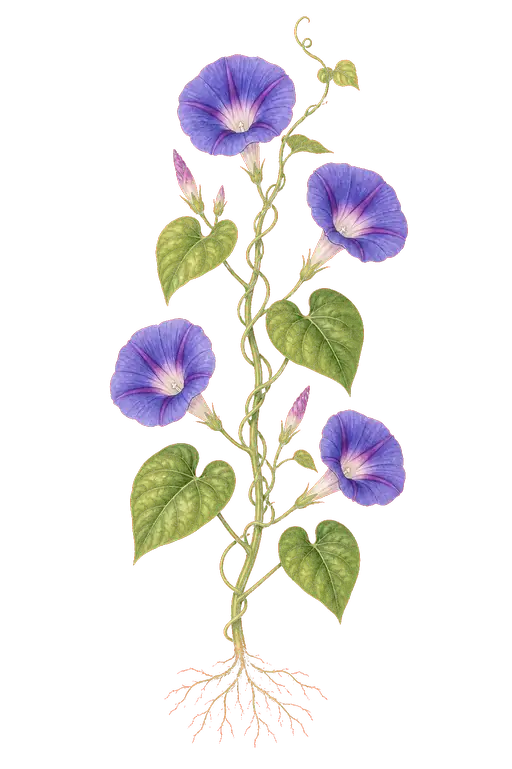
Convolvulaceae
Morning glory family
Kamlata belongs to the Convolvulaceae family.
The illustration represents the family — not necessarily this exact species.
Explore the Convolvulaceae familySnap it. Know it.
Point your camera at Kamlata or any plant and SASYA identifies it instantly — on-device, offline, and private.
Common plant problems
If you are starting from symptoms instead of a diagnosis, use the plant disease symptom checker to narrow the cause before treating.
All plant problem & care guides