
Kaladana / English Morning Glory
Ipomoea nil
Also known as American Plant, Morning Glory, Pharbitis Seeds
- Habit
- Climber
- Found in India
- Maharashtra, Rajasthan, Tamil Nadu & more
- Flowering
- August-April
How to identify Kaladana
Identify Kaladana by combining habit, leaf characters, flower or fruit details, location, and its family pattern. Do not rely on one feature alone.
- Look for a climber habit.
- Check the distinctive field mark: Classic cultivated Japanese morning glory.
- Confirm leaf shape: Ovate.
- Confirm leaf margin: Lobed.
- Confirm flower colour: Purple.
- Confirm flower arrangement: Cyme.
- In season, compare flowering and fruiting time: August-April.
Plant Details
- Scientific name
- Ipomoea nil
- Genus
- Ipomoea
- Family
- Convolvulaceae
- Habit
- Climber
- Habitat
- Deciduous forests, also in the plains
- Habitat type
- Forest
- Native to
- North America
- Distribution
- Naturalized in tropics
- Found in India
- Maharashtra, Rajasthan, Tamil Nadu, Telangana, Kerala, Uttarakhand, Karnataka, Madhya Pradesh, Andhra Pradesh, Assam, Himachal Pradesh, Punjab, Bihar, Gujarat, Uttar Pradesh, Arunachal Pradesh, Jammu & Kashmir, Manipur, West Bengal
- Flowering & fruiting
- August-April
- Conservation status
- Not Evaluated (NE)
Leaf characters
- Leaf shape
- OvaterecordedEgg-shaped, broader near the base.“The finely hairy, emerald green leaves are ovate to almost circular, 5 to 14 cm long.” — Wikipedia, CC BY-SA 4.0
- Leaf margin
- LobedrecordedThe edge is divided into rounded or pointed sections that don't reach the midrib.“The base is heart-shaped, the edge is entire or lobed three to five times, the leaf lobes are pointed or tapering.” — Wikipedia, CC BY-SA 4.0
- Leaf surface
- PubescentrecordedCovered in short, soft hairs.“The finely hairy, emerald green leaves are ovate to almost circular, 5 to 14 cm long.” — Wikipedia, CC BY-SA 4.0

Typical of the family
- Arrangement
- Alternate
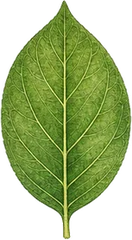

Characters marked “recorded” are for Kaladana itself; the rest are typical of the Convolvulaceae family.
Flower & fruit characters
- Flower colour
- PurplerecordedPurple or violet
- Flower arrangement
- CymerecordedA branched cluster where the central/terminal flower opens first.“The funnel-shaped, colorful flowers (blue to reddish-purple, with whitish tube) are quite showy and are individually up to five in often dense cymose groups, in which fully develop” — Wikipedia, CC BY-SA 4.0
- Fruit type
- CapsulerecordedA dry fruit from a fused ovary that splits open at maturity to release seeds.“The fruits are almost spherical to spherical capsule fruits with a diameter of 8 to 12 mm.” — Wikipedia, CC BY-SA 4.0
Typical of the family
- Flower symmetry
- Actinomorphic (radially symmetrical)
- Inflorescence
- Cyme
- Fruit
- Capsule
Characters marked “recorded” are for Kaladana itself; the rest are typical of the Convolvulaceae family — flowering plants only.
Local Names
- Hindi
- Jharmaric, कालादाना Kaladana, नीलकलमी Neelkalmi
- Nepali
- सिउंरी Siyunri
- Bengali
- কালাদানা Kaladana
- Tamil
- Kakkattan, Kotikkakkattan, Sirikki
- Telugu
- Kollivittulu, Jiriki, kolli
- Kannada
- ಗೌರೀಬೀಜ Gowri beeja, ಕೊಳ್ಳಿಬೀಜ Kolli beeja
- Malayalam
- Taliyari, കൃഷ്ണബീജം
- Marathi
- कालादाना Kaladana, नीलपुष्पी Neelpushpi, निळी पुंगळी
Kaladana in India
This climbing annual, known as Jharmaric (Hindi), Kakkattan (Tamil), Kollivittulu (Telugu), ಗೌರೀಬೀಜ Gowri beeja (Kannada), Taliyari (Malayalam), कालादाना Kaladana (Marathi), is grown ornamentally and valued for its seeds in traditional use. Ipomoea nil is found across Maharashtra, Rajasthan, Tamil Nadu, Telangana, Kerala, Uttarakhand, both cultivated and growing wild along fences and hedges.
Uses
It's grown as an ornamental climber for its abundant trumpet-shaped flowers, and its small black seeds (kaladana) have a long history of traditional use in some folk and Ayurvedic systems — an attributed traditional use, not a medical claim, and not for self-administration.
How to Identify Kaladana
A twining annual vine with heart-shaped, sometimes three-lobed leaves, covered in fine hairs. Funnel-shaped flowers open in shades of blue, purple or pink in the morning and close by afternoon, followed by a small capsule containing dark seeds.
Frequently Asked Questions
- What is English morning glory called in different Indian languages?
- Jharmaric (Hindi); Kakkattan (Tamil); Kollivittulu (Telugu); ಗೌರೀಬೀಜ Gowri beeja (Kannada); Taliyari (Malayalam); कालादाना Kaladana (Marathi); কালাদানা Kaladana (Bengali).
- Why is it called 'morning glory'?
- Its funnel-shaped flowers open freshly each morning and typically wilt or close by the afternoon heat, a pattern shared by many Ipomoea species.
- Are kaladana seeds safe to use?
- They should only ever be used under expert traditional guidance, never self-administered — some morning glory seeds carry compounds that can cause serious effects if misused.
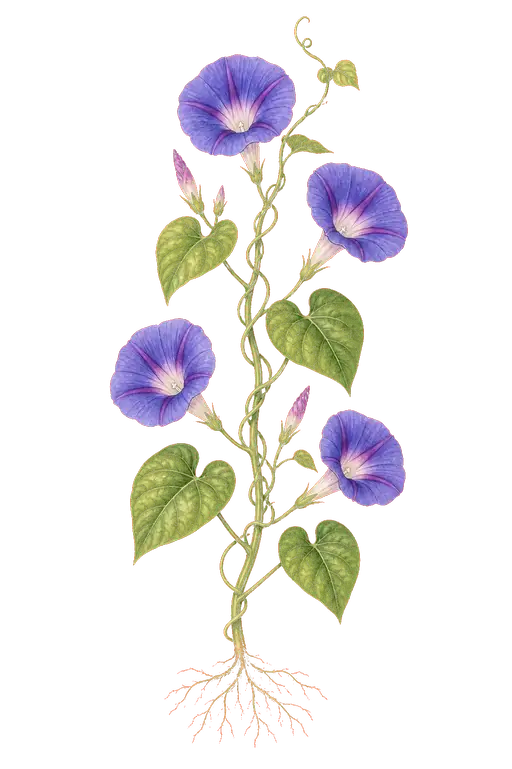
Convolvulaceae
Morning glory family
Kaladana belongs to the Convolvulaceae family.
The illustration represents the family — not necessarily this exact species.
Explore the Convolvulaceae familySnap it. Know it.
Point your camera at Kaladana or any plant and SASYA identifies it instantly — on-device, offline, and private.
Common plant problems
If you are starting from symptoms instead of a diagnosis, use the plant disease symptom checker to narrow the cause before treating.
All plant problem & care guidesMore in Convolvulaceae
View all ConvolvulaceaeSources: GBIF — Ipomoea nil (India distribution & vernacular names) (CC BY 4.0) · Wikipedia — Ipomoea nil (background/comprehension only) (CC BY-SA 4.0)