
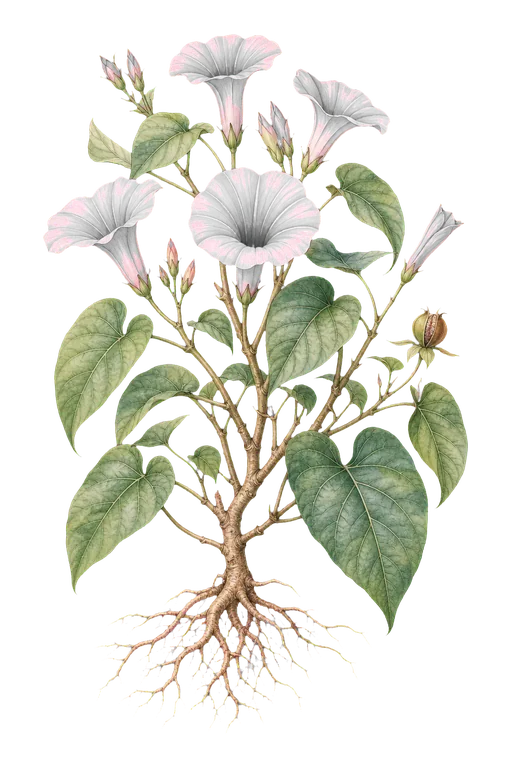
Behaya / Hedge Glory
Ipomoea carnea
- Habit
- Shrub
- Found in India
- Tamil Nadu, Maharashtra, Karnataka & more
- Flowering
- February-July
How to identify Behaya
Identify Behaya by combining habit, leaf characters, flower or fruit details, location, and its family pattern. Do not rely on one feature alone.
- Look for a shrub habit.
- Check the distinctive field mark: Erect shrubby habit, not a vine (hedge glory).
- Confirm leaf shape: Cordate (heart-shaped).
- Confirm flower colour: Pink.
- Use the leaf pattern: alternate leaf arrangement, simple leaves, entire leaf margins, palmate venation.
- In season, compare flowering and fruiting time: February-July.
- In India, compare location records such as Tamil Nadu, Maharashtra, Karnataka, Uttarakhand and nearby regions.
Plant Details
- Scientific name
- Ipomoea carnea
- Genus
- Ipomoea
- Family
- Convolvulaceae
- Habit
- Shrub
- Native to
- South America
- Found in India
- Tamil Nadu, Maharashtra, Karnataka, Uttarakhand, Kerala, Telangana, Odisha, Andhra Pradesh, Chhattisgarh, Madhya Pradesh, Gujarat, West Bengal, Rajasthan, Uttar Pradesh, Assam, Haryana, Bihar, Jharkhand, Tripura, Himachal Pradesh, Puducherry, Jammu & Kashmir
- Flowering & fruiting
- February-July
- Conservation status
- Not Evaluated (NE)
Leaf characters
- Leaf shape
- Cordate (heart-shaped)recorded
Typical of the family
- Arrangement
- Alternate
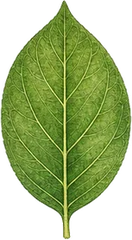


Characters marked “recorded” are for Behaya itself; the rest are typical of the Convolvulaceae family.
Flower & fruit characters
- Flower colour
- Pinkrecorded
Typical of the family
- Flower symmetry
- Actinomorphic (radially symmetrical)
- Inflorescence
- Cyme
- Fruit
- Capsule
Characters marked “recorded” are for Behaya itself; the rest are typical of the Convolvulaceae family — flowering plants only.
Local Names
- Hindi
- बेहया Behaya
- Telugu
- ఐపోమియా
- Kannada
- ಇಪೋಮಿಯ
- Malayalam
- morning glory
- Marathi
- बेशरम Besharam
Behaya in India
Besharam — literally 'shameless', for how aggressively it grows — lines ditches and ponds everywhere — बेहया Behaya (Hindi), ఐపోమియా (Telugu), ಇಪೋಮಿಯ (Kannada), morning glory (Malayalam), बेशरम Besharam (Marathi). Ipomoea carnea is recorded across Tamil Nadu, Maharashtra, Karnataka, Uttarakhand, Kerala, Odisha, forming dense thickets on wet ground.
Uses
It is mainly significant as an invasive weed and a bank-binder rather than a useful plant: it chokes water bodies and drains and is toxic to livestock. Its light stems are sometimes used for craft and biomass; it is best known as a species to control.
How to Identify Behaya
A large, soft-stemmed shrub with greyish, heart-to-spear-shaped leaves and milky sap. It bears clusters of pale pink, funnel-shaped morning-glory flowers with a darker throat for most of the year, forming impenetrable thickets along water.
Frequently Asked Questions
- What is Hedge Glory called in different Indian languages?
- बेहया Behaya (Hindi); ఐపోమియా (Telugu); ಇಪೋಮಿಯ (Kannada); morning glory (Malayalam); बेशरम Besharam (Marathi).
- Is besharam a useful plant?
- Mostly no — it is an aggressive invasive that chokes ditches and ponds and is toxic to livestock, though it does help bind banks and is used for biomass.
- Why is it called besharam?
- The name means 'shameless', referring to how vigorously and uncontrollably it spreads along water bodies and waste ground.
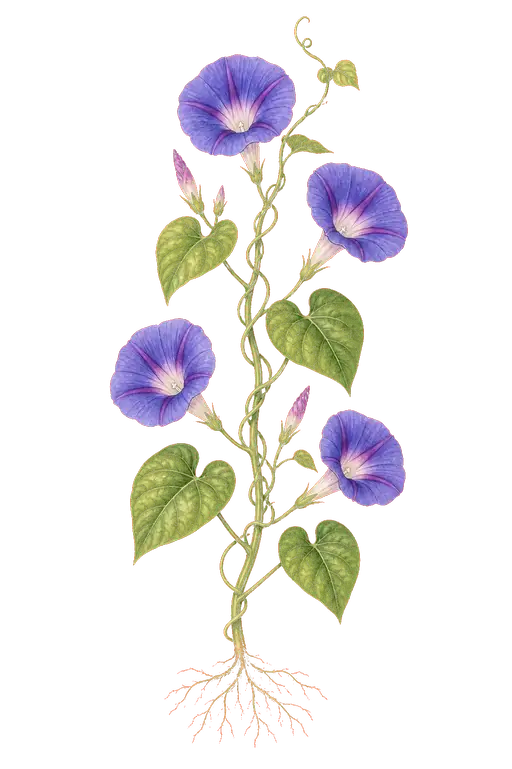
Convolvulaceae
Morning glory family
Behaya belongs to the Convolvulaceae family.
The illustration represents the family — not necessarily this exact species.
Explore the Convolvulaceae familySnap it. Know it.
Point your camera at Behaya or any plant and SASYA identifies it instantly — on-device, offline, and private.
Common plant problems
If you are starting from symptoms instead of a diagnosis, use the plant disease symptom checker to narrow the cause before treating.
All plant problem & care guidesMore in Convolvulaceae
View all ConvolvulaceaeSources: GBIF — Ipomoea carnea (India distribution & vernacular names) (CC BY 4.0) · iNaturalist — Ipomoea carnea (regional names, India observations) (CC BY 4.0) · Wikipedia — Ipomoea carnea (background/comprehension only) (CC BY-SA 4.0)