
Dudhiakalmi / Moonflower
Ipomoea alba
Also known as Koali-Pehu
- Habit
- Liana
- Found in India
- Kerala, Karnataka, Maharashtra & more
- Flowering
- September-February
How to identify Dudhiakalmi
Identify Dudhiakalmi by combining habit, leaf characters, flower or fruit details, location, and its family pattern. Do not rely on one feature alone.
- Look for a liana habit.
- Check the distinctive field mark: Large fragrant night-blooming flowers (moonflower).
- Confirm leaf shape: Cordate (heart-shaped).
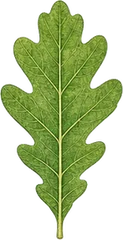
- Confirm leaf margin: Lobed.
- Confirm flower colour: White.
- In season, compare flowering and fruiting time: September-February.
- In India, compare location records such as Kerala, Karnataka, Maharashtra, Assam and nearby regions.
Plant Details
- Scientific name
- Ipomoea alba
- Genus
- Ipomoea
- Family
- Convolvulaceae
- Habit
- Liana
- Habitat
- Moist deciduous forests, also along sea coasts
- Native to
- Tropical America
- Distribution
- Naturalized in tropics
- Found in India
- Kerala, Karnataka, Maharashtra, Assam, Madhya Pradesh, Tamil Nadu, Uttarakhand, Goa, Andhra Pradesh, Gujarat, Odisha, Puducherry
- Flowering & fruiting
- September-February
- Conservation status
- Not Evaluated (NE)
Leaf characters
- Leaf shape
- Cordate (heart-shaped)recorded
- Leaf margin
- LobedrecordedThe edge is divided into rounded or pointed sections that don't reach the midrib.“The leaves are entire or three-lobed, 5–15 cm (2–6 in) long, with a stem 5–20 cm (2–8 in) long.” — Wikipedia, CC BY-SA 4.0
Typical of the family
- Arrangement
- Alternate
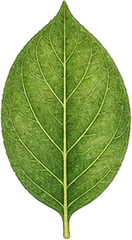
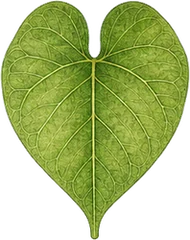
Characters marked “recorded” are for Dudhiakalmi itself; the rest are typical of the Convolvulaceae family.
Flower & fruit characters
- Flower colour
- Whiterecorded
Typical of the family
- Flower symmetry
- Actinomorphic (radially symmetrical)
- Inflorescence
- Cyme
- Fruit
- Capsule
Characters marked “recorded” are for Dudhiakalmi itself; the rest are typical of the Convolvulaceae family — flowering plants only.
Local Names
- Hindi
- दूधियाकलमी Dudhiakalmi
- Tamil
- Naganamukkorai
- Kannada
- ಚಂದ್ರಪುಷ್ಪ Chandra pushpa, ಚಂದ್ರಕಾಂತಿ Chandrakaanti, ಗುಲ್ ಚಾಂದನಿ
- Malayalam
- Munda-valli, ഇപോമോയ ആൽബ
- Marathi
- गुलचांदी Gulchandi, सकनकळी Sakanakali
Dudhiakalmi in India
Moonflower is a large white-flowered morning-glory vine recorded in India from Kerala, Karnataka, Maharashtra, Assam, Madhya Pradesh, Tamil Nadu, Uttarakhand, Goa and other states. Indian names include दूधियाकलमी Dudhiakalmi (Hindi), ಚಂದ್ರಪುಷ್ಪ Chandra pushpa / ಚಂದ್ರಕಾಂತಿ Chandrakaanti (Kannada), Munda-valli (Malayalam), and गुलचांदी Gulchandi (Marathi).
Uses
It is planted as an ornamental climber for its large night-opening white flowers, often grown on fences, pergolas and garden supports.
How to Identify Dudhiakalmi
Identify moonflower by its very large white funnel-shaped flowers that open in the evening or at night, a climbing vine habit, and broad heart-shaped to shallowly lobed leaves. Compare it with railway creeper: Ipomoea cairica has smaller purple flowers and more deeply divided leaves, while moonflower has showy white blooms and a night-flowering habit.
Frequently Asked Questions
- How is moonflower different from railway creeper?
- Moonflower has very large white flowers that open at night and broader leaves. Railway creeper usually has smaller purple flowers and deeply divided leaves.
- When does Ipomoea alba flower in India?
- SASYA records mark flowering and fruiting mainly from September to February, though garden plants may vary with climate and watering.
- What are Indian names for moonflower?
- Recorded names include Dudhiakalmi in Hindi, Chandra pushpa or Chandrakaanti in Kannada, Munda-valli in Malayalam, and Gulchandi in Marathi.
Convolvulaceae
Morning glory family
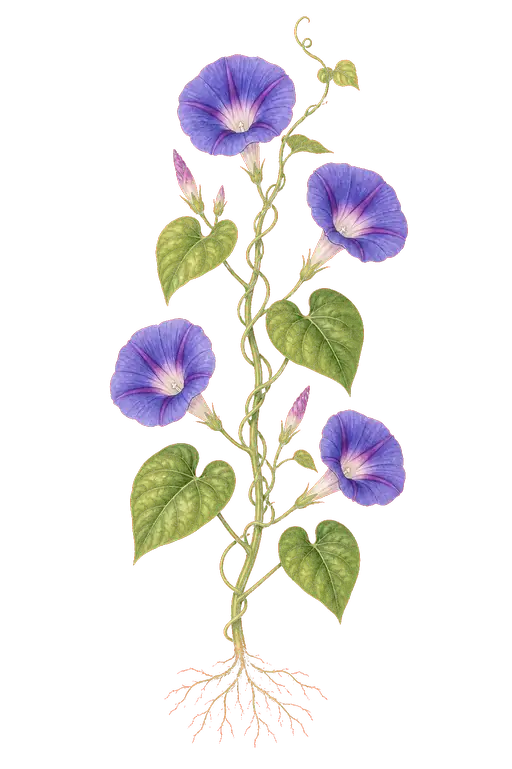
Dudhiakalmi belongs to the Convolvulaceae family.
The illustration represents the family — not necessarily this exact species.
Explore the Convolvulaceae familySnap it. Know it.
Point your camera at Dudhiakalmi or any plant and SASYA identifies it instantly — on-device, offline, and private.
Common plant problems
If you are starting from symptoms instead of a diagnosis, use the plant disease symptom checker to narrow the cause before treating.
All plant problem & care guidesMore in Convolvulaceae
View all ConvolvulaceaeSources: GBIF — Ipomoea alba (CC BY 4.0) · iNaturalist — Ipomoea alba (CC BY 4.0)