
Phalasa / Phalsa
Grewia asiatica
- Habit
- Tree
- Found in India
- Maharashtra, West Bengal, Rajasthan & more
- Flowering
- November-August
How to identify Phalasa
Identify Phalasa by combining habit, leaf characters, flower or fruit details, location, and its family pattern. Do not rely on one feature alone.
- Look for a tree habit.
- Check the distinctive field mark: Cultivated edible purple berries (phalsa).
- Confirm leaf shape: Orbicular.
- Confirm flower colour: Yellow.
- Confirm flower arrangement: Cyme.
- In season, compare flowering and fruiting time: November-August.
- In India, compare location records such as Maharashtra, West Bengal, Rajasthan, Uttar Pradesh and nearby regions.
Plant Details
- Scientific name
- Grewia asiatica
- Genus
- Grewia
- Family
- Tiliaceae
- Habit
- Tree
- Habitat
- Semi-Evergreen forests
- Habitat type
- Forest
- Distribution
- India, Bangladesh, Sri Lanka
- Found in India
- Maharashtra, West Bengal, Rajasthan, Uttar Pradesh, Uttarakhand, Haryana, Madhya Pradesh, Arunachal Pradesh, Gujarat, Himachal Pradesh, Punjab
- Flowering & fruiting
- November-August
- Conservation status
- Not Evaluated (NE)
Leaf characters
- Leaf shape
- OrbicularrecordedRounded, roughly circular.“The leaves are broadly rounded, 5–18 cm long and broad, with a petiole 1–1.5 cm long.” — Wikipedia, CC BY-SA 4.0
Typical of the family
- Arrangement
- Alternate
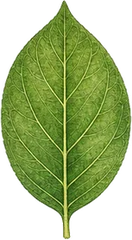
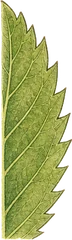

Characters marked “recorded” are for Phalasa itself; the rest are typical of the Tiliaceae family.
Flower & fruit characters
- Flower colour
- Yellowrecorded
- Flower arrangement
- CymerecordedA branched cluster where the central/terminal flower opens first.“The flowers are produced in cymes of several together, the individual flowers about 2 cm diameter, yellow, with five large (12 mm) sepals and five smaller (4–5 mm) petals.” — Wikipedia, CC BY-SA 4.0
- Fruit type
- DruperecordedA fleshy fruit with a single hard stone/pit enclosing the seed.“The fruit is an edible drupe 5–12 mm diameter, purple to black when ripe.” — Wikipedia, CC BY-SA 4.0
Typical of the family
- Flower symmetry
- Actinomorphic (radially symmetrical)
- Inflorescence
- Cyme
- Fruit
- Capsule
Characters marked “recorded” are for Phalasa itself; the rest are typical of the Tiliaceae family — flowering plants only.
Local Names
- Hindi
- फाल्सा Falsa,फ़ालसा falasa,फालसा phalasa
- Nepali
- फाल्सा Falsa, स्याल फुस्रे Syaal Phusre, स्याल फुस्रो Syaal Phusro, स्यालफुस्रो
- Bengali
- ফলসা
- Tamil
- உந்நு Unnu, தடச்சி
- Telugu
- Phutiki
- Kannada
- ಫುಲ್ಶಾ Phulsha, ಫುಲ್ಶಾ
- Marathi
- फालसा
- Gujarati
- ફાલસા (વનસ્પતિ)
- Urdu
- فالسہ
About Phalasa
A member of the Tiliaceae family, Phalsa (Grewia asiatica) is a tree. In India it has been recorded in Maharashtra, West Bengal, Rajasthan and 8 other states. It grows in semi-Evergreen forests. Flowering and fruiting run from November to August.
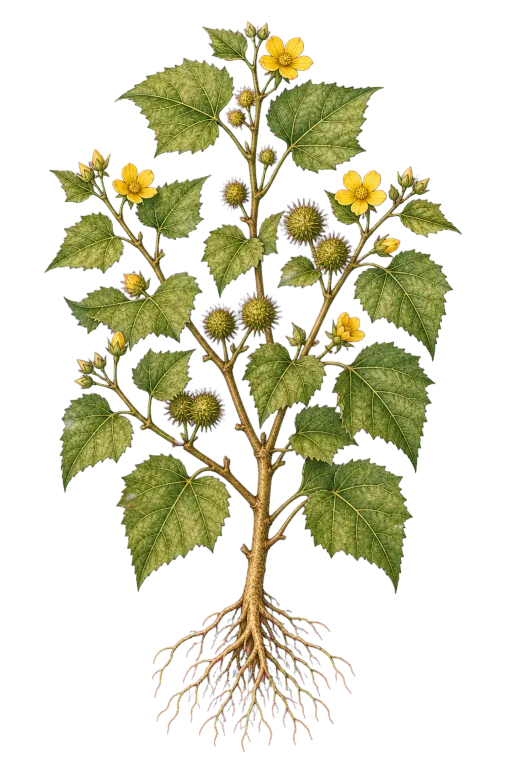
Tiliaceae
Lime tree/Jute family
Phalasa belongs to the Tiliaceae family.
The illustration represents the family — not necessarily this exact species.
Explore the Tiliaceae familySnap it. Know it.
Point your camera at Phalasa or any plant and SASYA identifies it instantly — on-device, offline, and private.
Common plant problems
If you are starting from symptoms instead of a diagnosis, use the plant disease symptom checker to narrow the cause before treating.
All plant problem & care guides