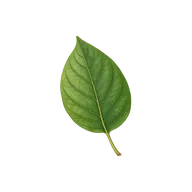
As recorded for Bastard Ebony
Diospyros ovalifolia
Bastard Ebony ചെറുതുവര
Malayalam name · See all regional names ↓
- Habit
- Tree
- Found in India
- Tamil Nadu, Karnataka
- Flowering
- April-July
Bastard Ebony in regional languages
Find the name you know, then compare it with the botanical profile. Columns list recorded aliases; they are not paired translations. A Latin spelling appears only when it is present in the source record.
| Language | Regional script | Recorded Latin spelling |
|---|---|---|
| Malayalam | ചെറുതുവര · കരിമ്പാല · വെടുക്കനാറി | Not recorded |
See the original recorded names
- Malayalam
- ചെറുതുവര, കരിമ്പാല, വെടുക്കനാറി
Ecology & growing context
- Native status · Kew WCVP
- WCVP native range includes India Kew dataset ↗︎
Kew WCVP dataset; accepted-name match. Dataset matching is separate from an individual regional review. Recorded worldwide native range: S. India, Sri Lanka, Bangladesh.
- Recorded habitat
- Dry evergreen, semi-evergreen and deciduous forests
- Explore nearby plants
- Tamil Nadu →Karnataka →
Occurrence records show where a plant has been recorded; they do not establish that it is native there. Compare local habitat and growing conditions when choosing plants for a garden.
How to identify Bastard Ebony
Identify Bastard Ebony by combining habit, leaf characters, flower or fruit details, location, and its family pattern. Do not rely on one feature alone.
- Look for a tree habit.
- Confirm leaf arrangement: Alternate.
- Confirm leaf type: Simple.
- In season, compare flowering and fruiting time: April-July.
- In India, compare location records such as Tamil Nadu, Karnataka.
- Confirm it sits within the Ebenaceae family pattern, then compare close relatives before deciding it is Bastard Ebony.
Plant Details
Leaf characters
- Leaf arrangement
- AlternaterecordedOne leaf per node, arranged in a spiral or zigzag up the stem.“Leaves are simple, alternate, and distichous.” — Wikipedia, CC BY-SA 4.0
- Leaf type
- SimplerecordedA single, undivided leaf blade.“Leaves are simple, alternate, and distichous.” — Wikipedia, CC BY-SA 4.0
- Leaf shape
- ObovaterecordedEgg-shaped but broader near the tip rather than the base.“Lamina is 5-13 x 1.5–5 cm, usually narrow obovate.” — Wikipedia, CC BY-SA 4.0
- Leaf margin
- EntirerecordedA smooth, unbroken edge with no teeth or notches.“The leaf is coriaceous and glabrous with entire margin.” — Wikipedia, CC BY-SA 4.0
- Leaf surface
- GlabrousrecordedSmooth, hairless.“Petiole is 0.5-1.0 cm long, canaliculate and glabrous.” — Wikipedia, CC BY-SA 4.0
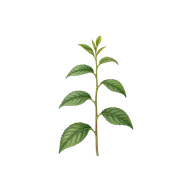
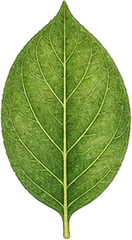
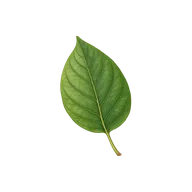
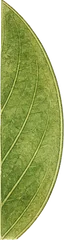
Characters marked “recorded” are for Bastard Ebony itself; the rest are typical of the Ebenaceae family.
Flower & fruit characters
- Inflorescence
- Panicle
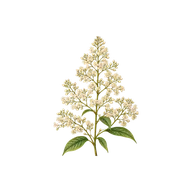
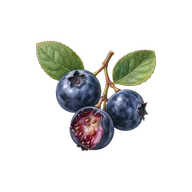
Typical of the Ebenaceae family — flowering plants only; individual species can differ.
About Bastard Ebony
Bastard Ebony (Diospyros ovalifolia) belongs to the Ebenaceae family, where it grows as a tree. In India it has been recorded in Tamil Nadu and Karnataka. It grows in dry evergreen, semi-evergreen and deciduous forests. Flowering and fruiting run from April to July.
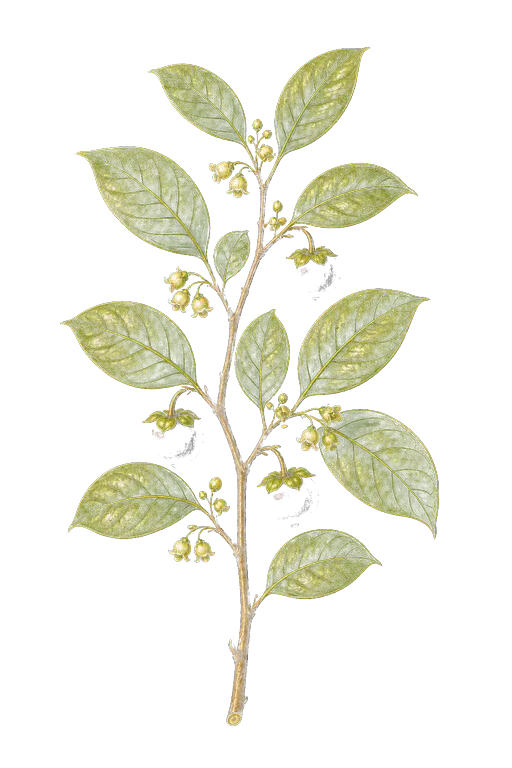
Ebenaceae
Ebony/Persimmon family
Bastard Ebony belongs to the Ebenaceae family.
The illustration represents the family — not necessarily this exact species.
Explore the Ebenaceae familySnap it. Know it.
Point your camera at Bastard Ebony or any plant and SASYA identifies it instantly — on-device, offline, and private.
Common plant problems
If you are starting from symptoms instead of a diagnosis, use the plant disease symptom checker to narrow the cause before treating.
All plant problem & care guides