
Gaab / Gaub Persimon
Diospyros malabarica
Also known as Indian Persimon, River Ebony, Malabar Ebony, Gaub Tree, Riber Ebony, Wild Mangosteen
- Habit
- Tree
- Found in India
- Kerala, Maharashtra, Madhya Pradesh & more
- Flowering
- March-April; Aprilil onwards
How to identify Gaab
Identify Gaab by combining habit, leaf characters, flower or fruit details, location, and its family pattern. Do not rely on one feature alone.
- Look for a tree habit.
- Check the distinctive field mark: Large tree, black astringent fruit (gaub/river ebony).
- Confirm leaf shape: Obovate (egg-shaped, broad at tip).
- Confirm leaf surface: Glabrous (smooth, hairless).
- Confirm flower colour: White.
- In season, compare flowering and fruiting time: March-April; Aprilil onwards.
- In India, compare location records such as Kerala, Maharashtra, Madhya Pradesh, West Bengal and nearby regions.
Plant Details
- Scientific name
- Diospyros malabarica
- Genus
- Diospyros
- Family
- Ebenaceae
- Habit
- Tree
- Habitat
- Stream banks of mixed forests, Evergreen forests and sacred groves
- Distribution
- India, Sri Lanka, Himalayas, Siam, W.Malesia, Indo-China
- Found in India
- Kerala, Maharashtra, Madhya Pradesh, West Bengal, Assam, Karnataka, Tamil Nadu, Uttarakhand, Rajasthan, Arunachal Pradesh, Himachal Pradesh, Odisha
- Flowering & fruiting
- March-April; Aprilil onwards
- Conservation status
- Not Evaluated (NE)
Leaf characters
- Leaf shape
- Obovate (egg-shaped, broad at tip)recorded
- Leaf surface
- Glabrous (smooth, hairless)recorded
Characters marked “recorded” are for Gaab itself; the rest are typical of the Ebenaceae family.
Flower & fruit characters
- Flower colour
- Whiterecorded“Diospyros malabarica, the gaub tree, Malabar ebony, black-and-white ebony or pale moon ebony, is a species of flowering tree in the family Ebenaceae that is native to the Indian su” — Wikipedia, CC BY-SA 4.0
Typical of the family
- Inflorescence
- Panicle
- Fruit
- Berry
Characters marked “recorded” are for Gaab itself; the rest are typical of the Ebenaceae family — flowering plants only.
Local Names
- Hindi
- गाब Gaab, Gaub
- Bengali
- দেশি গাব
- Tamil
- தும்பிகா Tumbika, Gaab, தும்பிலி மரம்
- Telugu
- Bandadamara, Panancca
- Kannada
- Bandadamara, ಎಬನಿ ಮರ
- Malayalam
- Panancca, പനച്ചി, Black-and-white Ebony, Temburi
- Marathi
- Temburi, Tumbika, टेंभुर्णी
- Assamese
- Kandu
Gaab in India
This tall tree, known as गाब Gaab (Hindi), தும்பிகா Tumbika (Tamil), Bandadamara (Telugu), Bandadamara (Kannada), Panancca (Malayalam), Temburi (Marathi), is a common sight along rivers and wetlands. Diospyros malabarica is found across Kerala, Maharashtra, Madhya Pradesh, West Bengal, Assam, Karnataka, typically near water.
Uses
Its wood has been used for construction and furniture, and the ripe fruit, though astringent, is eaten locally in some areas once fully soft — the same genus as commercial ebony and true persimmon.
How to Identify Gaab
A tall evergreen tree, often buttressed at the base, with glossy dark green leaves paler underneath. Small, cream, urn-shaped flowers are followed by round fruit that ripens from green to yellow-orange, topped with a persistent four-lobed calyx.
Frequently Asked Questions
- What is Gaub Persimon called in different Indian languages?
- गाब Gaab (Hindi); தும்பிகா Tumbika (Tamil); Bandadamara (Telugu); Bandadamara (Kannada); Panancca (Malayalam); Temburi (Marathi); দেশি গাব (Bengali).
- Is gaub the same as the persimmon sold in shops?
- No — it's a wild relative in the same genus (Diospyros) as commercial persimmon and ebony, but Diospyros malabarica's fruit is smaller and much less commonly eaten.
- Why does it grow along rivers?
- It tolerates and often prefers moist, waterlogged ground, which is why it's commonly found lining riverbanks and wetland edges.
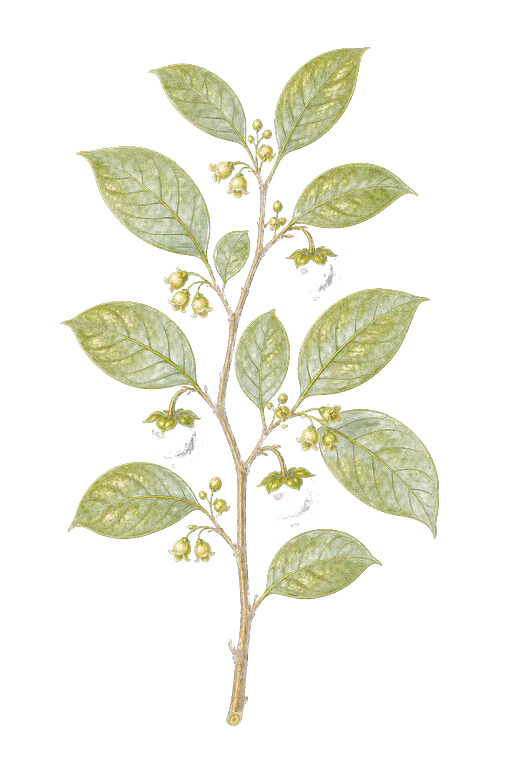
Ebenaceae
Ebony/Persimmon family
Gaab belongs to the Ebenaceae family.
The illustration represents the family — not necessarily this exact species.
Explore the Ebenaceae familySnap it. Know it.
Point your camera at Gaab or any plant and SASYA identifies it instantly — on-device, offline, and private.
Common plant problems
If you are starting from symptoms instead of a diagnosis, use the plant disease symptom checker to narrow the cause before treating.
All plant problem & care guidesMore in Ebenaceae
View all EbenaceaeSources: GBIF — Diospyros malabarica (India distribution & vernacular names) (CC BY 4.0) · Wikipedia — Diospyros malabarica (background/comprehension only) (CC BY-SA 4.0)