
Sapheda Dhatura / Common Thorn Apple
Datura stramonium
Also known as Stramonium, Datura, Devil's Apple, Jimson Weed
- Habit
- Shrub
- Found in India
- Uttarakhand, Jammu & Kashmir, Himachal Pradesh & more
- Flowering
- July-September
How to identify Sapheda Dhatura
Identify Sapheda Dhatura by combining habit, leaf characters, flower or fruit details, location, and its family pattern. Do not rely on one feature alone.
- Look for a shrub habit.
- Confirm leaf margin: Toothed.
- Confirm leaf surface: Glabrous.
- Confirm flower colour: White.
- Confirm fruit type: Capsule.
- In season, compare flowering and fruiting time: July-September.
- In India, compare location records such as Uttarakhand, Jammu & Kashmir, Himachal Pradesh, Maharashtra and nearby regions.
Plant Details
- Scientific name
- Datura stramonium
- Genus
- Datura
- Family
- Solanaceae
- Habit
- Shrub
- Habitat
- Waste places and scrub jungles
- Native to
- N. America
- Distribution
- Introduced in most parts of the world
- Found in India
- Uttarakhand, Jammu & Kashmir, Himachal Pradesh, Maharashtra, Tamil Nadu, Karnataka, Arunachal Pradesh, Uttar Pradesh, Gujarat, Telangana, Assam, Kerala, Odisha, Punjab, Rajasthan, Sikkim, West Bengal
- Flowering & fruiting
- July-September
- Conservation status
- Not Evaluated (NE)
Leaf characters
- Leaf margin
- ToothedrecordedA saw-like or jagged edge (serrate or dentate).“The leaves are about 8 to 20 cm (3–8 in) long, smooth, toothed, soft, and irregularly undulated.” — Wikipedia, CC BY-SA 4.0
- Leaf surface
- GlabrousrecordedSmooth, hairless.“The stem is stout, erect, leafy, smooth, and pale yellow-green to reddish purple in color.” — Wikipedia, CC BY-SA 4.0
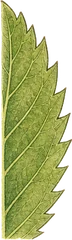
Typical of the family
- Arrangement
- Alternate
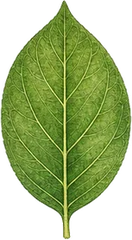

Characters marked “recorded” are for Sapheda Dhatura itself; the rest are typical of the Solanaceae family.
Flower & fruit characters
- Flower colour
- Whiterecorded
- Fruit type
- CapsulerecordedA dry fruit from a fused ovary that splits open at maturity to release seeds.“The egg-shaped seed capsule is 3 to 8 cm (1–3 in) in diameter and either covered with spines or bald.” — Wikipedia, CC BY-SA 4.0
Typical of the family
- Flower symmetry
- Actinomorphic (radially symmetrical)
- Inflorescence
- Cyme
- Fruit
- Berry
Characters marked “recorded” are for Sapheda Dhatura itself; the rest are typical of the Solanaceae family — flowering plants only.
Local Names
- Hindi
- सफेद धतूरा sapheda dhatura
- Nepali
- धतुरो
- Tamil
- ஊமத்தம்பூ
- Kannada
- ಬಿಳಿಉಮ್ಮತ್ತಿ Bili ummatti, ಉಂಬತ್ತಿ Umbatti, ದತ್ತವ Dattava
- Malayalam
- ഉമ്മം
- Marathi
- धोत्रा
Sapheda Dhatura in India
This coarse annual weed, known as सफेद धतूरा (Hindi), ஊமத்தம்பூ (Tamil), ಬಿಳಿಉಮ್ಮತ್ತಿ Bili ummatti (Kannada), ഉമ്മം (Malayalam), धोत्रा (Marathi), is a common sight on disturbed and waste ground. Datura stramonium is found across Uttarakhand, Jammu and Kashmir, Himachal Pradesh, Maharashtra, Tamil Nadu, Karnataka, thriving in nutrient-rich, disturbed soil.
Uses
It has no safe culinary or household use — every part of the plant is toxic, and while it has a history of use in some traditional systems under highly controlled expert conditions, it should never be self-administered, foraged or ingested in any form.
How to Identify Sapheda Dhatura
A coarse annual herb with large, irregularly toothed leaves that smell unpleasant when crushed. Large trumpet-shaped white to pale purple flowers open in the evening, followed by a distinctive spiny, egg-shaped seed capsule that splits into four parts when ripe.
Frequently Asked Questions
- What is Common thorn Apple called in different Indian languages?
- सफेद धतूरा (Hindi); ஊமத்தம்பூ (Tamil); ಬಿಳಿಉಮ್ಮತ್ತಿ Bili ummatti (Kannada); ഉമ്മം (Malayalam); धोत्रा (Marathi).
- Is thorn apple dangerous?
- Yes — every part of the plant, especially the seeds, is toxic and can cause serious poisoning; it should never be eaten, brewed, or self-administered in any form.
- How can you recognise it safely?
- Its spiny, egg-shaped seed capsule and large trumpet-shaped white or purple flowers are the clearest identifying features — best observed and avoided, not handled or ingested.
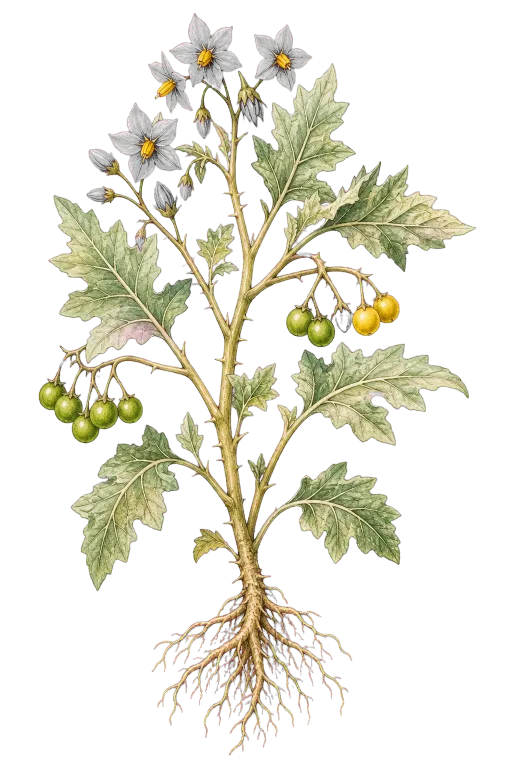
Solanaceae
Nightshade/Tomato family
Sapheda Dhatura belongs to the Solanaceae family.
The illustration represents the family — not necessarily this exact species.
Explore the Solanaceae familySnap it. Know it.
Point your camera at Sapheda Dhatura or any plant and SASYA identifies it instantly — on-device, offline, and private.
Common plant problems
If you are starting from symptoms instead of a diagnosis, use the plant disease symptom checker to narrow the cause before treating.
All plant problem & care guidesMore in Solanaceae
View all SolanaceaeSources: GBIF — Datura stramonium (India distribution & vernacular names) (CC BY 4.0) · Wikipedia — Datura stramonium (background/comprehension only) (CC BY-SA 4.0)