
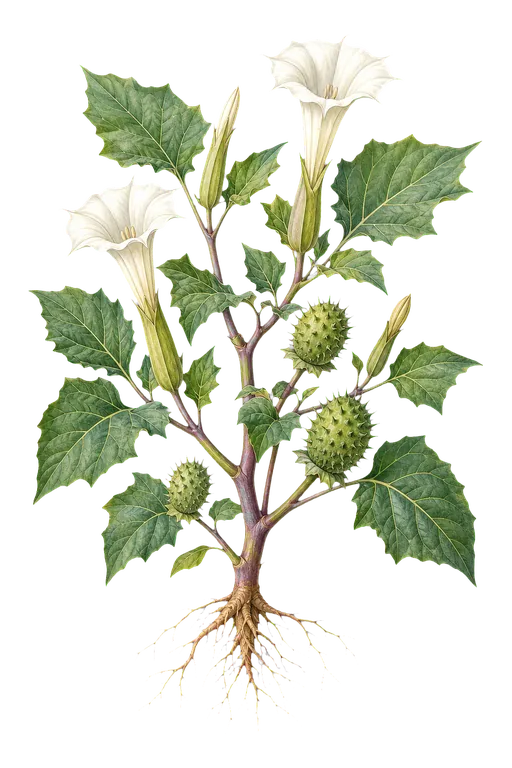
Safed Dhatura / Thorn Apple
Datura metel
Also known as Devils Weed, Datura, Jimpson Weed
- Habit
- Shrub
- Found in India
- Maharashtra, Gujarat, Karnataka & more
- Flowering
- Throughout the year
How to identify Safed Dhatura
Identify Safed Dhatura by combining habit, leaf characters, flower or fruit details, location, and its family pattern. Do not rely on one feature alone.
- Look for a shrub habit.
- Confirm leaf arrangement: Alternate.
- Confirm leaf type: Simple.
- Confirm flower colour: White or purple.
- Confirm fruit type: Capsule.
- Use the leaf pattern: alternate leaf arrangement, simple leaves, toothed leaf margins, pinnate venation.
- In season, compare flowering and fruiting time: Throughout the year.
Plant Details
- Scientific name
- Datura metel
- Genus
- Datura
- Family
- Solanaceae
- Habit
- Shrub
- Habitat
- Degraded dry- and moist deciduous forests and wastelands
- Native to
- Old World tropics
- Distribution
- Paleotropics
- Found in India
- Maharashtra, Gujarat, Karnataka, Uttarakhand, West Bengal, Telangana, Andhra Pradesh, Tamil Nadu, Odisha, Kerala, Assam, Uttar Pradesh, Rajasthan, Chhattisgarh, Madhya Pradesh, Goa, Bihar, Haryana, Himachal Pradesh, Delhi, Punjab, Tripura, Andaman & Nicobar Islands, Arunachal Pradesh, Chandigarh, Jammu & Kashmir, Lakshadweep, Meghalaya, Puducherry, Sikkim
- Flowering & fruiting
- Throughout the year
- Conservation status
- Not Evaluated (NE)
Leaf characters
- Leaf arrangement
- AlternaterecordedOne leaf per node, arranged in a spiral or zigzag up the stem.“The leaves are simple, alternate, petiolate, and exhibit entire or deeply lobed margins.” — Wikipedia, CC BY-SA 4.0
- Leaf type
- SimplerecordedA single, undivided leaf blade.“The leaves are simple, alternate, petiolate, and exhibit entire or deeply lobed margins.” — Wikipedia, CC BY-SA 4.0
- Leaf margin
- LobedrecordedThe edge is divided into rounded or pointed sections that don't reach the midrib.“The leaves are simple, alternate, petiolate, and exhibit entire or deeply lobed margins.” — Wikipedia, CC BY-SA 4.0
- Leaf surface
- PubescentrecordedCovered in short, soft hairs.“It is slightly pubescent, with green to dark violet shoots and oval to broad oval leaves that are often dark violet as well.” — Wikipedia, CC BY-SA 4.0
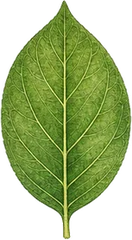
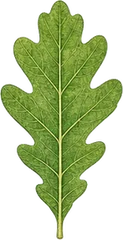
Typical of the family

Characters marked “recorded” are for Safed Dhatura itself; the rest are typical of the Solanaceae family.
Flower & fruit characters
- Flower colour
- White or purplerecorded
- Fruit type
- CapsulerecordedA dry fruit from a fused ovary that splits open at maturity to release seeds.“The seed capsule is covered with numerous conical warts or short, sparse spines.” — Wikipedia, CC BY-SA 4.0
Typical of the family
- Flower symmetry
- Actinomorphic (radially symmetrical)
- Inflorescence
- Cyme
- Fruit
- Berry
Characters marked “recorded” are for Safed Dhatura itself; the rest are typical of the Solanaceae family — flowering plants only.
Local Names
- Hindi
- Safed dhatura सफ़ैद धतूरा,धतूरा dhatura
- Bengali
- ধুতুরা, ধুতরো
- Tamil
- ஊமத்தை Umattai, மாதுளம் Madulam, ஊமத்தை
- Malayalam
- Ummata, ഉമ്മം, ഉമ്മത്ത്
- Sanskrit
- Māndārava
Safed Dhatura in India
Datura is a striking but dangerous plant of Indian waste ground, long associated with Lord Shiva — Safed dhatura सफ़ैद धतूरा (Hindi), ஊமத்தை Umattai (Tamil), Ummata (Malayalam), ধুতুরা (Bengali). Datura metel is recorded across Maharashtra, Gujarat, Karnataka, Uttarakhand, West Bengal, Telangana, springing up on rubbish heaps, field edges and disturbed soil.
Uses
The trumpet flowers and spiny fruits are traditional offerings to Shiva, especially on Mahashivratri. The plant appears in traditional medicine, but this is strongly tempered by one fact: it is highly poisonous and hallucinogenic, so it should be regarded as ritual and ornamental only, never consumed.
How to Identify Safed Dhatura
A robust herb with large, soft, oval leaves and big upward-facing trumpet flowers in white or purple. The fruit is a rounded capsule covered in soft spines that splits to scatter many seeds. The whole plant has an unpleasant smell when bruised.
Frequently Asked Questions
- What is Thorn Apple called in different Indian languages?
- Safed dhatura सफ़ैद धतूरा (Hindi); ஊமத்தை Umattai (Tamil); Ummata (Malayalam); ধুতুরা (Bengali); Māndārava (Sanskrit).
- Is datura poisonous?
- Yes — all parts of datura are highly toxic and hallucinogenic, and poisonings can be fatal; it should never be eaten and is best admired only as a ritual or wild plant.
- Why is datura associated with Lord Shiva?
- Datura flowers and fruits are traditional offerings to Shiva, particularly during Mahashivratri, despite — and partly because of — the plant's potent, dangerous nature.
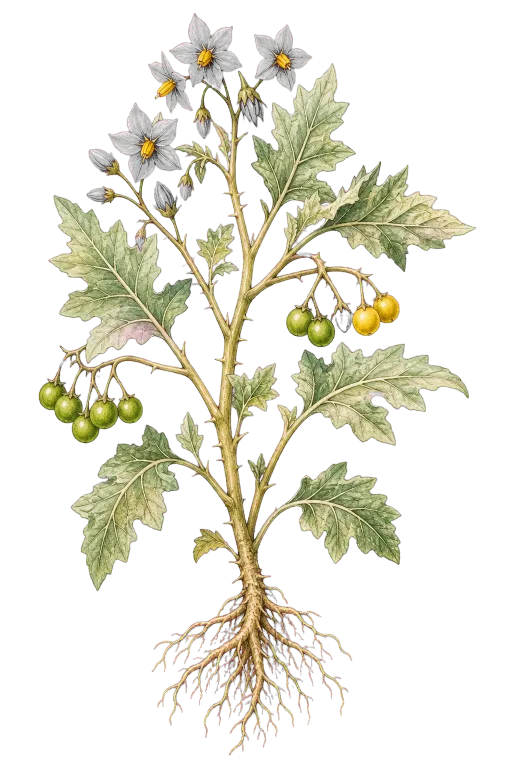
Solanaceae
Nightshade/Tomato family
Safed Dhatura belongs to the Solanaceae family.
The illustration represents the family — not necessarily this exact species.
Explore the Solanaceae familySnap it. Know it.
Point your camera at Safed Dhatura or any plant and SASYA identifies it instantly — on-device, offline, and private.
Common plant problems
If you are starting from symptoms instead of a diagnosis, use the plant disease symptom checker to narrow the cause before treating.
All plant problem & care guidesMore in Solanaceae
View all SolanaceaeSources: GBIF — Datura metel (India distribution & vernacular names) (CC BY 4.0) · iNaturalist — Datura metel (regional names, India observations) (CC BY 4.0) · Wikipedia — Datura metel (background/comprehension only) (CC BY-SA 4.0)