
Tropical Asian Chirita
Chirita hamosa
- Habit
- Herb
- Native to
- India
- Flowering
- August-January
How to identify Tropical Asian Chirita
Identify Tropical Asian Chirita by combining habit, leaf characters, flower or fruit details, location, and its family pattern. Do not rely on one feature alone.
- Look for a herb habit.
- Confirm leaf surface: Pubescent (softly hairy).
- Confirm flower colour: Purple.
- In season, compare flowering and fruiting time: August-January.
- Confirm it sits within the Gesneriaceae family pattern, then compare close relatives before deciding it is Tropical Asian Chirita.
Plant Details
- Scientific name
- Chirita hamosa
- Genus
- Chirita
- Family
- Gesneriaceae
- Habit
- Herb
- Habitat
- Moist and shaded places on hills
- Native to
- India
- Distribution
- India
- Flowering & fruiting
- August-January
- Conservation status
- Not Evaluated (NE)
Leaf characters
- Leaf surface
- Pubescent (softly hairy)recorded
Characters marked “recorded” are for Tropical Asian Chirita itself; the rest are typical of the Gesneriaceae family.
Flower & fruit characters
- Flower colour
- PurplerecordedPurple or violet
Typical of the family
- Flower symmetry
- Zygomorphic (bilaterally symmetrical)
- Inflorescence
- Cyme
- Fruit
- Berry
Characters marked “recorded” are for Tropical Asian Chirita itself; the rest are typical of the Gesneriaceae family — flowering plants only.
About Tropical Asian Chirita
A member of the Gesneriaceae family, Tropical Asian Chirita (Chirita hamosa) is a herb. It is native to India. It grows in moist and shaded places on hills. Flowering and fruiting run from August to January.
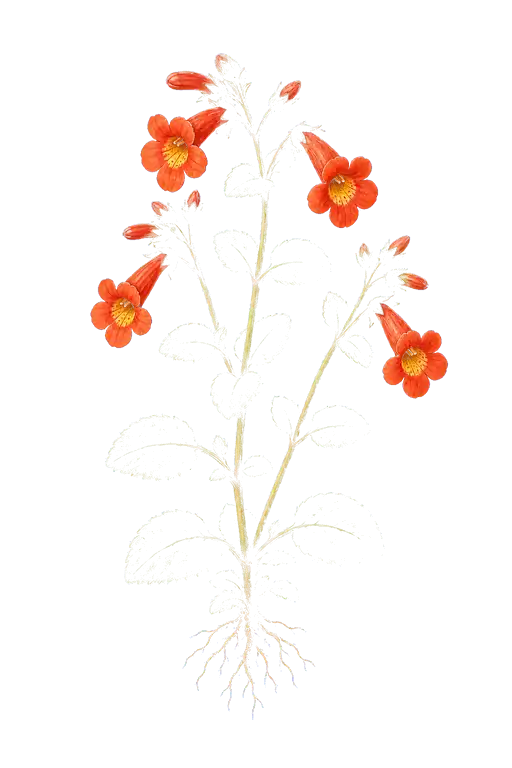
Gesneriaceae
Gesneria Family
Tropical Asian Chirita belongs to the Gesneriaceae family.
The illustration represents the family — not necessarily this exact species.
Explore the Gesneriaceae familySnap it. Know it.
Point your camera at Tropical Asian Chirita or any plant and SASYA identifies it instantly — on-device, offline, and private.
Common plant problems
If you are starting from symptoms instead of a diagnosis, use the plant disease symptom checker to narrow the cause before treating.
All plant problem & care guides