
Guletura / Dwarf Poinciana
Caesalpinia pulcherrima
Also known as Peacock Flower, Barbados Pride, Peacock Cassia, Barbados Flower-Fence, Gold Mohur
- Habit
- Shrub
- Found in India
- Maharashtra, Tamil Nadu, Karnataka & more
- Flowering
- Throughout the year
How to identify Guletura
Identify Guletura by combining habit, leaf characters, flower or fruit details, location, and its family pattern. Do not rely on one feature alone.
- Look for a shrub habit.
- Check the distinctive field mark: Long showy red stamens (peacock flower).
- Confirm leaf type: Bipinnately compound.
- Confirm flower colour: Yellow.
- Confirm flower arrangement: Raceme.
- In season, compare flowering and fruiting time: Throughout the year.
- In India, compare location records such as Maharashtra, Tamil Nadu, Karnataka, Telangana and nearby regions.
Plant Details
- Scientific name
- Caesalpinia pulcherrima
- Genus
- Caesalpinia
- Family
- Caesalpiniaceae
- Habit
- Shrub
- Habitat
- Grown as ornamental plant
- Habitat type
- Cultivated
- Native to
- Tropical America
- Distribution
- Widely Cultivated
- Found in India
- Maharashtra, Tamil Nadu, Karnataka, Telangana, Kerala, Gujarat, Goa, Andhra Pradesh, West Bengal, Rajasthan, Odisha, Madhya Pradesh, Delhi, Assam, Uttarakhand, Chhattisgarh, Uttar Pradesh, Bihar, Haryana, Tripura, Puducherry, Punjab, Arunachal Pradesh, Himachal Pradesh, Jharkhand
- Flowering & fruiting
- Throughout the year
- Conservation status
- Not Evaluated (NE)
Leaf characters
- Leaf type
- Bipinnately compoundrecordedThe leaf is divided twice — each 'leaflet' is itself a row of smaller leaflets, giving a fine, fern-like look.“The leaves are bipinnate, 20–40 cm long, bearing three to 10 pairs of pinnae, each with six to 10 pairs of leaflets 15–25 mm long and 10–15 mm broad.” — Wikipedia, CC BY-SA 4.0
Typical of the family
- Arrangement
- Alternate


Characters marked “recorded” are for Guletura itself; the rest are typical of the Caesalpiniaceae family.
Flower & fruit characters
- Flower colour
- Yellowrecorded
- Flower arrangement
- RacemerecordedIndividual stalked flowers arranged along a central stem, opening from bottom to top.“The flowers are borne in racemes up to 20 cm long, each flower with five yellow, orange, or red petals.” — Wikipedia, CC BY-SA 4.0
- Fruit type
- LegumerecordedA dry pod that splits open along two seams (typical of the pea/bean family).“The fruit is a pod 6–12 cm long.” — Wikipedia, CC BY-SA 4.0
Typical of the family
- Flower symmetry
- Zygomorphic (bilaterally symmetrical)
- Inflorescence
- Raceme
- Fruit
- Legume
Characters marked “recorded” are for Guletura itself; the rest are typical of the Caesalpiniaceae family — flowering plants only.
Local Names
- Hindi
- गुलेतूरा guletura
- Bengali
- ক্রিশ্নচূড়া Krishnachura, রাধাচূড়া Radhachura, রাধাচূড়া
- Tamil
- Mayurkonrai, மயில் கொன்றை
- Telugu
- రత్నగంధీ Ratnagandhi
- Kannada
- ಕೆಂಜಿಗೆ Kenjige, ರತ್ನಗಂಧಿ Ratnagandhi, ರತ್ನಗಂಧಿ
- Malayalam
- Settimandaram, രാജമല്ലി, Caesalpinia pulcherrima
- Marathi
- Sankasur, रासतुरा
Guletura in India
This ornamental shrub, known as गुलेतूरा guletura (Hindi), Mayurkonrai (Tamil), రత్నగంధీ Ratnagandhi (Telugu), ಕೆಂಜಿಗೆ Kenjige (Kannada), Settimandaram (Malayalam), Sankasur (Marathi), is planted widely for its vivid flowers. Caesalpinia pulcherrima is grown across Maharashtra, Tamil Nadu, Telangana, Karnataka, Kerala, Gujarat, both as a garden shrub and a flowering hedge.
Uses
It's grown almost entirely as an ornamental, valued for its long flowering season and vivid orange-red-and-yellow blossom, and is also planted as a flowering screening hedge.
How to Identify Guletura
A shrub or small tree with finely divided, fern-like bipinnate leaves. Flowers have crinkled, fringed petals in orange, red or yellow with very long, protruding red stamens, followed by flat pods.
Frequently Asked Questions
- What is Dwarf poinciana called in different Indian languages?
- गुलेतूरा guletura (Hindi); Mayurkonrai (Tamil); రత్నగంధీ Ratnagandhi (Telugu); ಕೆಂಜಿಗೆ Kenjige (Kannada); Settimandaram (Malayalam); Sankasur (Marathi); ক্রিশ্নচূড়া Krishnachura (Bengali).
- Is this the same tree as Gulmohar?
- No — true Gulmohar (Delonix regia) is a large shade tree, while peacock flower (Caesalpinia pulcherrima) is a much smaller ornamental shrub, though both have similarly vivid orange-red flowers.
- What colours does it come in?
- Commonly orange-red with yellow edges, but pure yellow and pink-red flowered forms are also grown.
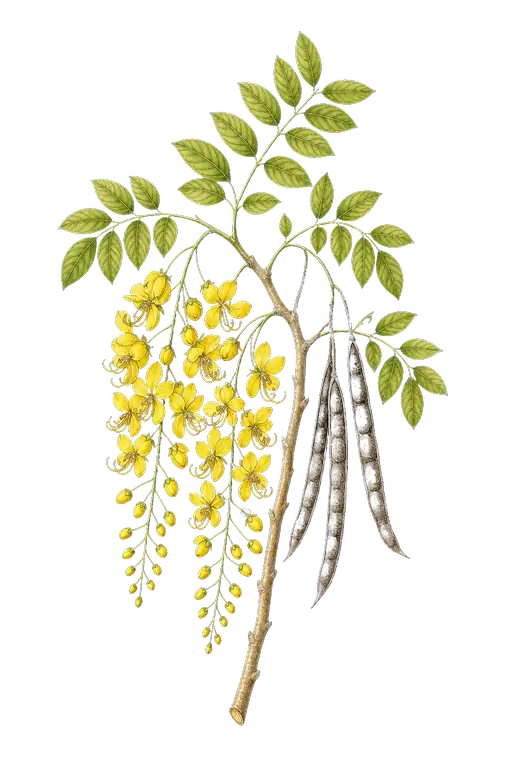
Caesalpiniaceae
Senna family
Guletura belongs to the Caesalpiniaceae family.
The illustration represents the family — not necessarily this exact species.
Explore the Caesalpiniaceae familySnap it. Know it.
Point your camera at Guletura or any plant and SASYA identifies it instantly — on-device, offline, and private.
Common plant problems
If you are starting from symptoms instead of a diagnosis, use the plant disease symptom checker to narrow the cause before treating.
All plant problem & care guidesMore in Caesalpiniaceae
View all CaesalpiniaceaeSources: GBIF — Caesalpinia pulcherrima (India distribution & vernacular names) (CC BY 4.0) · Wikipedia — Caesalpinia pulcherrima (background/comprehension only) (CC BY-SA 4.0)