
Shallaki / Indian Olibanum Tree
Boswellia serrata
Also known as Indian Frankincense, White Dammer
- Habit
- Tree
- Found in India
- Rajasthan, Maharashtra, Telangana & more
- Flowering
- January-August
How to identify Shallaki
Identify Shallaki by combining habit, leaf characters, flower or fruit details, location, and its family pattern. Do not rely on one feature alone.
- Look for a tree habit.
- Check the distinctive field mark: Papery peeling bark, source of Indian frankincense resin.
- Confirm leaf type: Pinnately compound (leaflets in rows along a stalk).
- In season, compare flowering and fruiting time: January-August.
- In India, compare location records such as Rajasthan, Maharashtra, Telangana, Delhi and nearby regions.
- Confirm it sits within the Burseraceae family pattern, then compare close relatives before deciding it is Shallaki.
Plant Details
- Scientific name
- Boswellia serrata
- Genus
- Boswellia
- Family
- Burseraceae
- Habit
- Tree
- Habitat
- Deciduous forests
- Habitat type
- Forest
- Native to
- India
- Distribution
- India
- Found in India
- Rajasthan, Maharashtra, Telangana, Delhi, Madhya Pradesh, Gujarat, Andhra Pradesh, Tamil Nadu, Karnataka, Bihar, Uttar Pradesh, Haryana, Uttarakhand, Assam, Chhattisgarh, Himachal Pradesh, West Bengal
- Flowering & fruiting
- January-August
- Conservation status
- Not Evaluated (NE)
Leaf characters
- Leaf type
- Pinnately compound (leaflets in rows along a stalk)recorded
Typical of the family
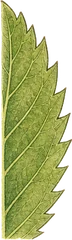

Characters marked “recorded” are for Shallaki itself; the rest are typical of the Burseraceae family.
Flower & fruit characters
- Fruit
- Drupe
Typical of the Burseraceae family — flowering plants only; individual species can differ.
Local Names
- Hindi
- शल्लकी shallaki, kundur, luban, Chira
- Tamil
- குமஞ்சம் kumancam, குங்கிலியம் kunkiliyam, மரத்துவெள்ளை marattu-vellai, சாம்பிராணி
- Telugu
- గుగ్గిలము guggilamu, పరంగిసాంబ్రాణిచెట్టు parangi-sambrani-chettu, సల్లకి sallaki
- Kannada
- ಗುಗ್ಗುಳ ಮರ guggula mara, ಆನೆಬೇಲ Anebela, ಇಡಬೋಲ Idabol, Kundu
- Malayalam
- കുങ്ങില്യം kungilyam, കുന്തിരിക്കം, Boswellia serrata
- Marathi
- धुपाळी dhupali, धूपसाळी dhupasali, कुरुंद kurunda, Dhupali
- Sanskrit
- Hastinashana
- Gujarati
- Saaledi
Shallaki in India
This tree, known as शल्लकी shallaki (Hindi), குமஞ்சம் kumancam (Tamil), గుగ్గిలము guggilamu (Telugu), ಗುಗ್ಗುಳ ಮರ guggula mara (Kannada), കുങ്ങില്യം kungilyam (Malayalam), धुपाळी dhupali (Marathi), is the source of Indian frankincense resin. Boswellia serrata is found across Rajasthan, Maharashtra, Telangana, NCT of Delhi, Gujarat, Madhya Pradesh, typically on dry, rocky hillsides.
Uses
Its aromatic resin (salai guggul) is burned as incense and has a long history of traditional Ayurvedic use — an attributed traditional use, not a medical claim.
How to Identify Shallaki
A deciduous tree with flaking, papery bark and pinnate compound leaves clustered at the branch tips. Small greenish-white flowers appear in loose spikes, and cutting the bark releases a fragrant, milky resin that hardens into translucent, aromatic lumps.
Frequently Asked Questions
- What is Indian Olibanum Tree called in different Indian languages?
- शल्लकी shallaki (Hindi); குமஞ்சம் kumancam (Tamil); గుగ్గిలము guggilamu (Telugu); ಗುಗ್ಗುಳ ಮರ guggula mara (Kannada); കുങ്ങില്യം kungilyam (Malayalam); धुपाळी dhupali (Marathi); Saaledi (Gujarati); Hastinashana (Sanskrit).
- Is this the same frankincense as from the Middle East?
- It's a related but different species — Middle Eastern frankincense typically comes from Boswellia sacra, while Indian frankincense comes from Boswellia serrata, with a broadly similar but distinct resin.
- How is the resin collected?
- The bark is deliberately cut to encourage resin flow, which is left to harden into aromatic lumps before being scraped off and collected.
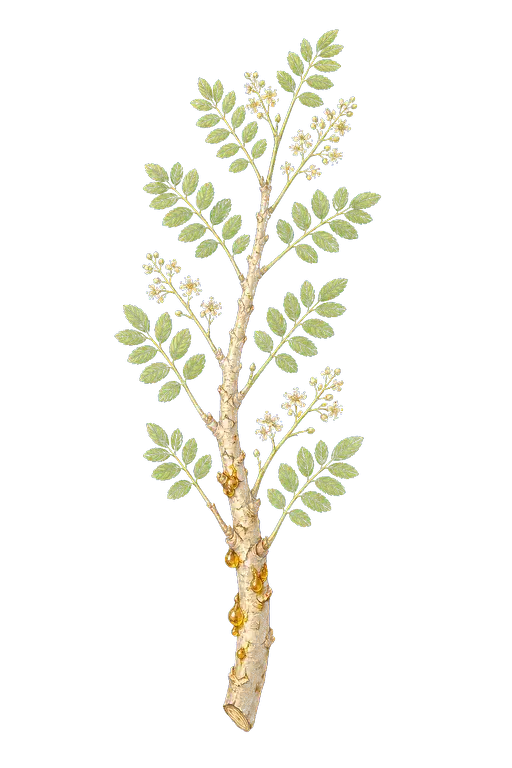
Burseraceae
Bursera Family
Shallaki belongs to the Burseraceae family.
The illustration represents the family — not necessarily this exact species.
Explore the Burseraceae familySnap it. Know it.
Point your camera at Shallaki or any plant and SASYA identifies it instantly — on-device, offline, and private.
Common plant problems
If you are starting from symptoms instead of a diagnosis, use the plant disease symptom checker to narrow the cause before treating.
All plant problem & care guidesMore in Burseraceae
View all BurseraceaeSources: GBIF — Boswellia serrata (India distribution & vernacular names) (CC BY 4.0) · Wikipedia — Boswellia serrata (background/comprehension only) (CC BY-SA 4.0)