Punarnava / Common Hogweed
Boerhavia diffusa
Also known as Spreading Hogweed, Pigweed, Gorgon, Prickly Water Lily, Hogweed
- Habit
- Herb
- Found in India
- Telangana, Gujarat, Rajasthan & more
- Flowering
- Throughout the year
How to identify Punarnava
Identify Punarnava by combining habit, leaf characters, flower or fruit details, location, and its family pattern. Do not rely on one feature alone.
- Look for a herb habit.
- Check the distinctive field mark: Prostrate, spreading along the ground.
- Confirm leaf arrangement: Opposite.
- Confirm leaf shape: Ovate.
- Confirm flower colour: Pink.
- Confirm flower arrangement: Corymb.
- Use the leaf pattern: opposite leaf arrangement, simple leaves, entire leaf margins, pinnate venation.
Plant Details
- Scientific name
- Boerhavia diffusa
- Genus
- Boerhavia
- Family
- Nyctaginaceae
- Habit
- Herb
- Distribution
- Pantropical, Australia
- Found in India
- Telangana, Gujarat, Rajasthan, Maharashtra, Tamil Nadu, Kerala, Karnataka, West Bengal, Uttar Pradesh, Andhra Pradesh, Uttarakhand, Madhya Pradesh, Delhi, Himachal Pradesh, Odisha, Puducherry, Arunachal Pradesh, Bihar, Haryana, Jammu & Kashmir, Jharkhand, Punjab, Sikkim
- Flowering & fruiting
- Throughout the year
- Conservation status
- Least Concern (LC)
Leaf characters
- Leaf arrangement
- OppositerecordedTwo leaves arise from the stem at the same point, facing each other.“Leaves Opposite, oblique, ovate or sub orbicular, rounded, entire, margins slightly pinkish, wavy, lower surface with small, white scales, base rounded.” — Wikipedia, CC BY-SA 4.0
- Leaf shape
- OvaterecordedEgg-shaped, broader near the base.“Leaves Opposite, oblique, ovate or sub orbicular, rounded, entire, margins slightly pinkish, wavy, lower surface with small, white scales, base rounded.” — Wikipedia, CC BY-SA 4.0
- Leaf margin
- UndulaterecordedA wavy, rippled edge.“Leaves Opposite, oblique, ovate or sub orbicular, rounded, entire, margins slightly pinkish, wavy, lower surface with small, white scales, base rounded.” — Wikipedia, CC BY-SA 4.0
Typical of the family
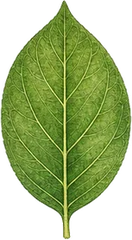
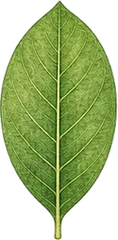
Characters marked “recorded” are for Punarnava itself; the rest are typical of the Nyctaginaceae family.
Flower & fruit characters
- Flower colour
- Pinkrecorded
- Flower arrangement
- CorymbrecordedA flat-topped cluster where outer flower stalks are longer than inner ones.“Inflorescence Small umbels forming Corymbose, axillary and terminal panicle.” — Wikipedia, CC BY-SA 4.0
- Fruit type
- AchenerecordedA small, dry, single-seeded fruit that does not split open.“Fruit Achene rounded, 6-ribbed.” — Wikipedia, CC BY-SA 4.0
Typical of the family
- Flower symmetry
- Actinomorphic (radially symmetrical)
- Inflorescence
- Cyme
- Fruit
- Achene
Characters marked “recorded” are for Punarnava itself; the rest are typical of the Nyctaginaceae family — flowering plants only.
Local Names
- Hindi
- Punarnava, Satha, punarnava
- Nepali
- पुनर्नवा Punarnavaa, पुनर्वा Punarvaa, लाल पुनर्नवा Laal Punarnavaa
- Tamil
- மூக்கரட்டி சாரை
- Telugu
- అటికమామిడి
- Kannada
- ಅಡಕಪುಟ್ಟ Adakaputta, ಅಡಕಪುಟ್ಟನಗಿಡ Adakaputtana gida, ಕೊಮ್ಮೆ Komme
- Malayalam
- തഴുതാമ, പുനർനവ, ശോതാഗ്നി
- Marathi
- पुनर्नवा, घेटुळी
Punarnava in India
Punarnava is a sprawling roadside weed valued in Ayurveda — Punarnava (Hindi), மூக்கரட்டி சாரை (Tamil), అటికమామిడి (Telugu), ಅಡಕಪುಟ್ಟ Adakaputta (Kannada), തഴുതാമ (Malayalam), पुनर्नवा (Marathi), the 'renewer'. Boerhavia diffusa is recorded across Gujarat, Telangana, Maharashtra, Tamil Nadu, Kerala, Rajasthan, springing up with the monsoon on waste ground.
Uses
Its root is one of the best-known traditional remedies associated with the kidneys and fluid balance in Ayurveda — an attributed use described for information, not medical advice. The young leaves are also cooked as a green in some regions.
How to Identify Punarnava
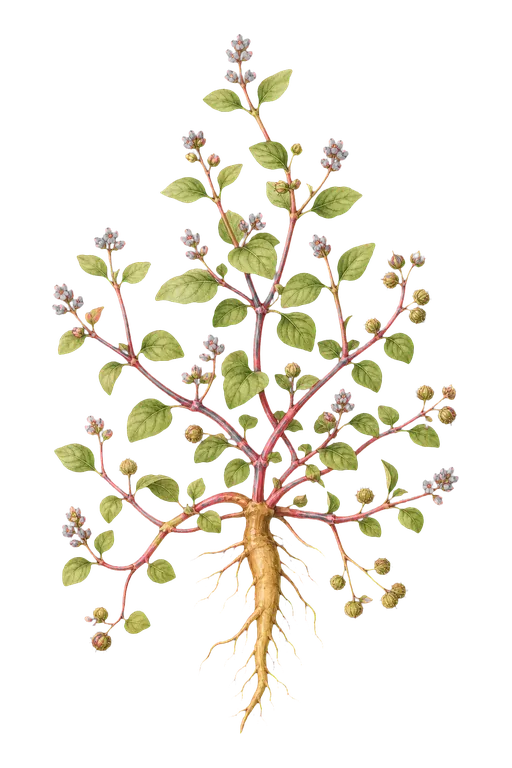
A spreading, much-branched herb with reddish, jointed, often sticky stems lying along the ground. The leaves are paired and unequal, rounded with wavy edges and pale undersides, and tiny pink flowers sit in small clusters on long stalks.
Frequently Asked Questions
- What is Common Hogweed called in different Indian languages?
- Punarnava (Hindi); மூக்கரட்டி சாரை (Tamil); అటికమామిడి (Telugu); ಅಡಕಪುಟ್ಟ Adakaputta (Kannada); തഴുതാമ (Malayalam); पुनर्नवा (Marathi).
- What is punarnava used for?
- Punarnava root is a classical Ayurvedic remedy associated with the kidneys and water balance; this is a traditional, attributed use and not medical advice.
- Is punarnava edible?
- Its tender leaves are eaten as a cooked green (saag) in parts of India, in addition to the plant's traditional medicinal reputation.
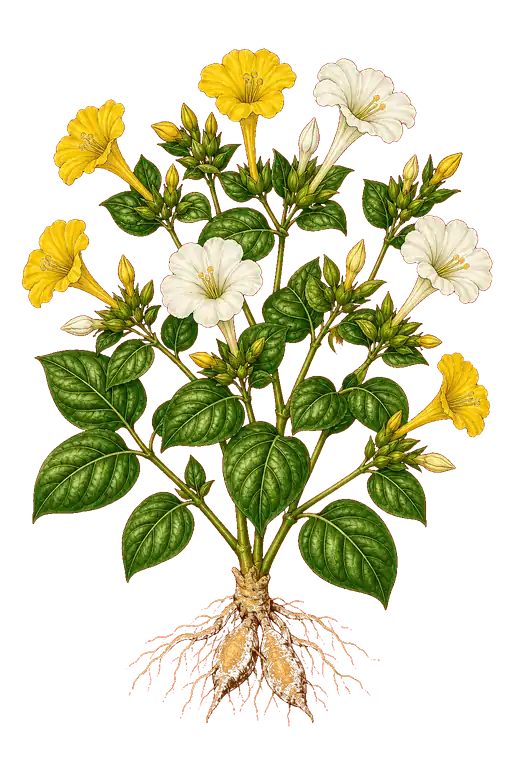
Nyctaginaceae
Four-O'clock Family
Punarnava belongs to the Nyctaginaceae family.
The illustration represents the family — not necessarily this exact species.
Explore the Nyctaginaceae familySnap it. Know it.
Point your camera at Punarnava or any plant and SASYA identifies it instantly — on-device, offline, and private.
Common plant problems
If you are starting from symptoms instead of a diagnosis, use the plant disease symptom checker to narrow the cause before treating.
All plant problem & care guidesMore in Nyctaginaceae
View all NyctaginaceaeSources: GBIF — Boerhavia diffusa (India distribution & vernacular names) (CC BY 4.0) · iNaturalist — Boerhavia diffusa (regional names, India observations) (CC BY 4.0) · Wikipedia — Boerhavia diffusa (background/comprehension only) (CC BY-SA 4.0)