Punicaceae family
Pomegranate Family
1 catalogue species · Order Myrtales
The Punicaceae family (Pomegranate Family) is a botanical family placed in the order Myrtales. It is represented by a single species in the SASYA catalogue. That species is a tree. Several members are valued in traditional medicine.
Explore the species roster ↓Field identification keys
Compare several features together. These are typical family patterns; individual species can vary. Observe without tasting or handling unfamiliar plants.
- Stem cross-section
- Round
- Distinctive marker
- Persistent, leathery calyx hardens into the crown-shaped structure atop a ripe pomegranate; seeds individually wrapped in juicy, edible arils.
Familiar members: Anaar
Species in Punicaceae
1 of 1 species
Native status is regional. Range tags distinguish Kew WCVP dataset matches from individual reviews. Pet-filter records report no known toxicity to cats and dogs; some sources cover a genus or cultivar. Review the source context. Missing values are excluded, and no rating establishes suitability to eat or freedom from other hazards.
| Botanical name | Common & regional names | Origin & reviewed pet status |
|---|---|---|
| Punica granatum | Anaar Pomegranate
+6 languages
| Introduced: India ↗︎ Kew datasetKew WCVP dataset; accepted-name match. Dataset matching is separate from an individual regional review. Recorded worldwide native range: NE. Türkiye to W. & N. Pakistan. |
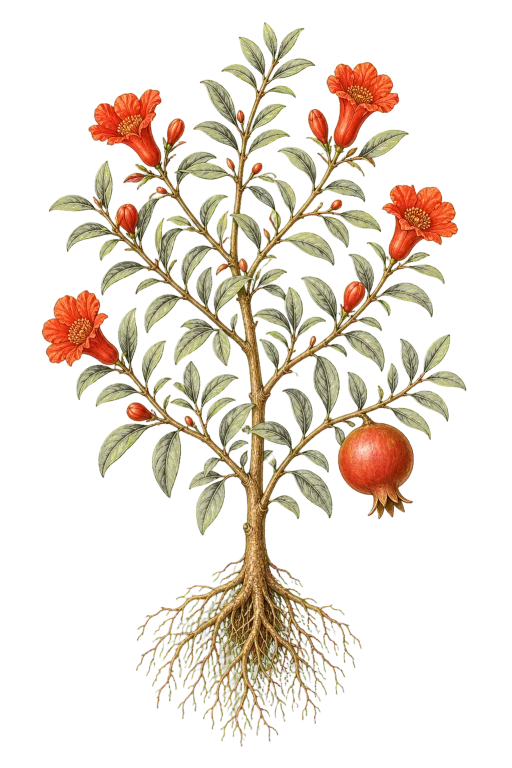
Opposite, glossy leaves on shrubs and small trees; bright red-orange, crinkled-petalled flowers have a thick, leathery, persistent calyx that hardens into the crown seen on a ripe pomegranate, encasing hundreds of juicy seed-coated arils inside.
The crown-like calyx that tops a ripe pomegranate is the same persistent flower calyx found on every relative in the wider henna and crepe-myrtle family, just unusually thickened and woody here.
To check whether a plant belongs to Punicaceae, compare the leaf arrangement, leaf type, flower symmetry, fruit type, and one distinctive marker together. A single feature can mislead; the family pattern is the combination.
Learn the full family-identification methodFamilies that can look similar
Myrtaceae
Compare against Myrtaceae when the plant shares similar leaves, flowers, or fruit. Confirm by checking the full family pattern.
Compare MyrtaceaeMelastomataceae
Compare against Melastomataceae when the plant shares similar leaves, flowers, or fruit. Confirm by checking the full family pattern.
Compare MelastomataceaeCombretaceae
Compare against Combretaceae when the plant shares similar leaves, flowers, or fruit. Confirm by checking the full family pattern.
Compare CombretaceaeLythraceae
Compare against Lythraceae when the plant shares similar leaves, flowers, or fruit. Confirm by checking the full family pattern.
Compare LythraceaeMeet Punicaceae in the field
Point your camera, explore possible matches and compare the field marks. Identification runs on your phone, offline and private.
Download SASYA — Free