
Cyperaceae
Sedge family
The sedge family — superficially grass-like but distinguishable by their solid, 3-angled (triangular) stems. Dominant in wetlands, marshes, and other waterlogged habitats worldwide. Important in wetland ecology and soil stabilisation; papyrus (Cyperus papyrus) produced the world's earliest paper.
Browse all 24 species ↓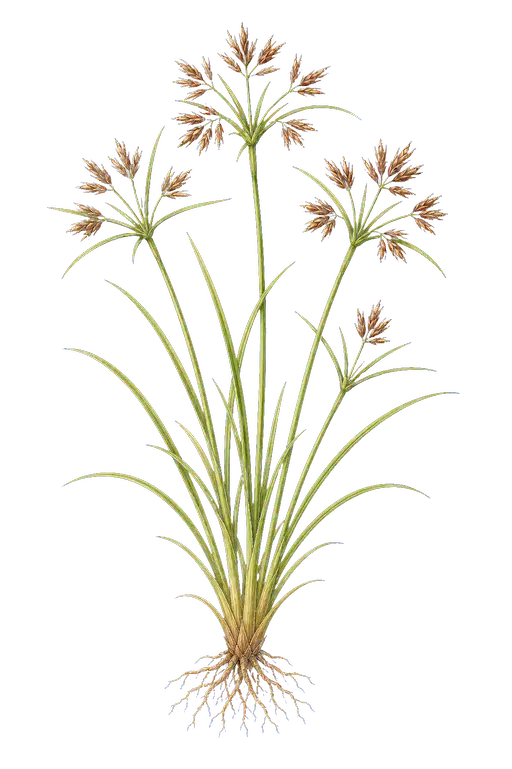
Solid, triangular (three-angled) stems without nodes, unlike the round, hollow, jointed stems of true grasses; leaves are arranged in three ranks rather than two, and tiny wind-pollinated flowers hide inside overlapping scales in dense spikelets.
Dominant across wetlands, marshes, and other waterlogged habitats worldwide — the triangular stem alone is often enough to separate this family from grasses at a glance ('sedges have edges').
Which Cyperaceae species is this?
Answer what you can see and narrow it down to a single Cyperaceae species.
How to recognise the Cyperaceae family
- 01
3-angled solid stems ('sedges have edges')
- 02
Leaves in 3 ranks (tristichous)
- 03
Small wind-pollinated florets in spikelets
To check whether a plant belongs to Cyperaceae, compare the leaf arrangement, leaf type, flower symmetry, fruit type, and one distinctive marker together. A single feature can mislead; the family pattern is the combination.
Learn the full family-identification methodTypical leaf characters
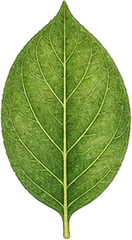


Characters typical of the family — individual species can vary.
Typical flower & fruit
- Flower symmetryActinomorphic (radially symmetrical)
- InflorescenceSpike
- FruitAchene
Typical of the family — flowering plants only; species can vary.
Notable members
Families that can look similar
Poaceae
Compare against Poaceae when the plant shares similar leaves, flowers, or fruit. Confirm by checking the full family pattern.
Compare PoaceaeAsteraceae
Compare against Asteraceae when the plant shares similar leaves, flowers, or fruit. Confirm by checking the full family pattern.
Compare AsteraceaeEriocaulaceae
Compare against Eriocaulaceae when the plant shares similar leaves, flowers, or fruit. Confirm by checking the full family pattern.
Compare EriocaulaceaePolygonaceae
Compare against Polygonaceae when the plant shares similar leaves, flowers, or fruit. Confirm by checking the full family pattern.
Compare PolygonaceaeAll 24 species in CYPERACEAE
- Umbrella Plant, Galingale, Papyrus, Umbrella SedgeCyperus alternifolius
- Old Gold Flat SedgeCyperus cyperinus
- Slender CyperusCyperus distans
- Star SedgeCyperus dubius
- Rice Flat SedgeCyperus iria
- Whitehead SpikesedgeCyperus kyllingia
- PapyrusCyperus papyrus
- Nut Grass, Purple Flat SedgeCyperus rotundus
- Bearded Flat SedgeCyperus squarrosus
- NutgrassCyperus stoloniferus
- Star FimbryFimbristylis lawiana
- Angled-Stem FimbryFimbristylis tetragona
- Umbrella GrassFuirena ciliaris
- Jointed FlatsedgeKyllinga brevifolia
- Whitehead Spike SedgeKyllinga nemoralis
- Annual Flat-SedgePycreus pumilus
- Two-Color Beak-SedgeRhynchospora wightiana
- Jointed SedgeSchoenoplectiella articulata
- Rock BulrushSchoenoplectus juncoides
- Cyperus paniceus
- Cyperus pulchellus
- Fuirena trilobites
- Kyllinga bulbosa
- Pycreus atroglumosus
Identify any Cyperaceae plant in seconds
Point your camera and SASYA names the species on-device — offline and private.
Download SASYA — Free