
Tulsi leaves turning black? Look beneath the surface.
If tulsi leaves are turning black, first check whether the black material is on the surface or the leaf tissue itself has changed. A dark coating with sticky leaves points to a different investigation from expanding dead spots. Do not choose a spray from the colour alone.
This guide concerns holy basil, Ocimum tenuiflorum, also known as Ocimum sanctum. Kew lists the latter as a synonym. Other basils sold under familiar names can differ, so confirm the plant before applying species-specific advice.
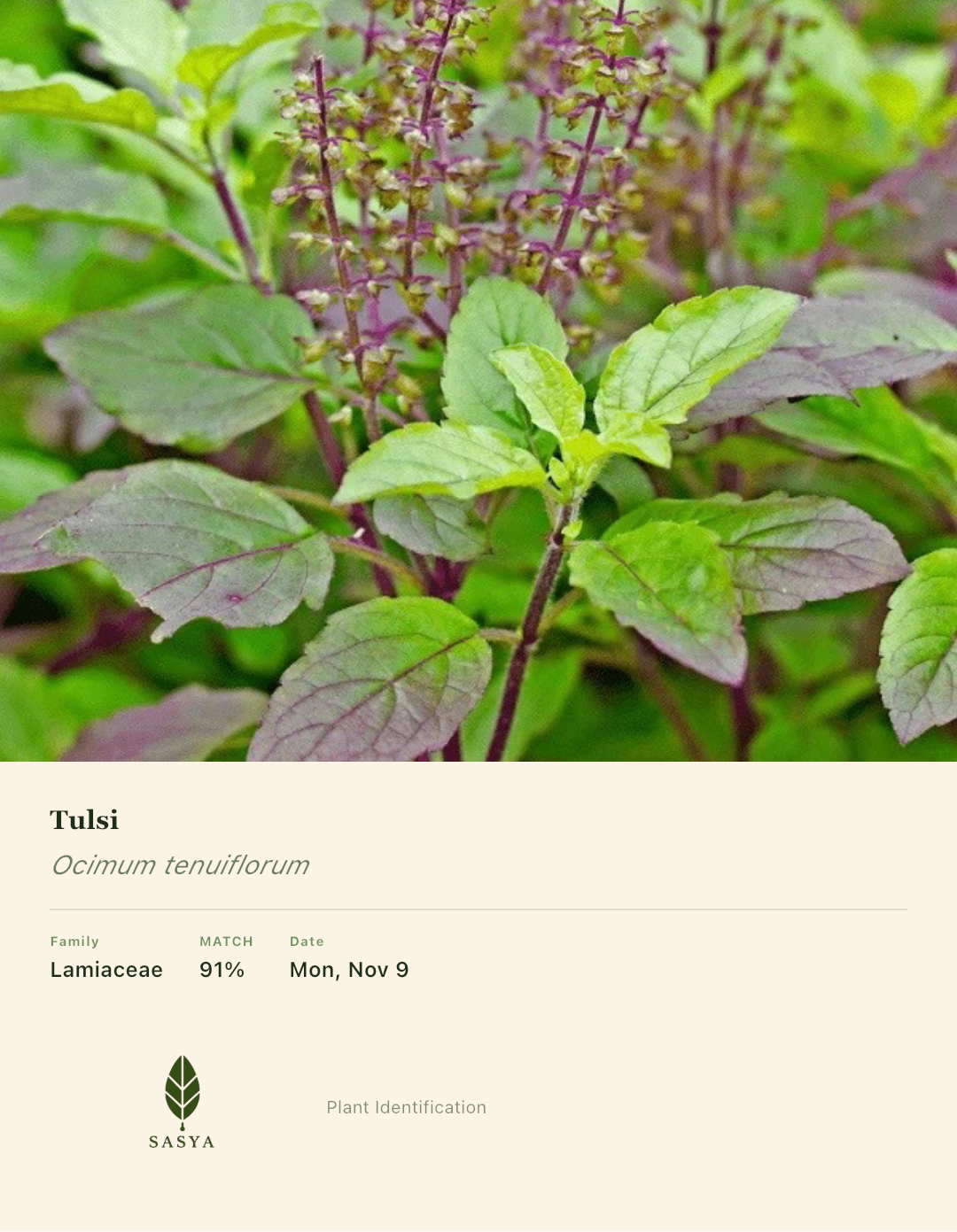
Start with one leaf, then look at the whole plant
Choose an affected leaf that is still attached. Photograph its top, underside and attachment, then the whole plant and pot. Look at a healthy leaf beside it. Is the dark area new? Does it feel sticky? Are insects visible on new shoots or leaf undersides?
On a small area, gently check the coating with a damp cloth. Avoid scrubbing or bruising the leaf. This observation can help separate a surface deposit from dead tissue, but it does not identify an organism.
| Pattern | What to investigate | What it does not establish |
|---|---|---|
| Black surface coating, often with stickiness | Honeydew-producing insects and possible sooty mould | That the leaf has an internal fungal infection |
| Brown or black patches within the leaf | Leaf injury or a leaf-spot problem | Which pathogen, if any, caused it |
| Yellow areas above, grey downy growth below | A possible downy-mildew pattern | That sweet-basil disease guidance applies unchanged to your tulsi |
| Broad purple colour without new dead patches | Normal pigmentation versus a recent change | That every dark leaf is diseased |
Holy basil can have a purple cast. North Carolina Extension's tulsi profile also notes its preference for moist, well-drained soil and poor tolerance of waterlogging. Compare colour with the plant's previous appearance rather than treating purple foliage as black spotting.
If the leaves are sticky and coated
Sooty mould grows on honeydew deposited by sap-feeding insects; it grows on the surface rather than infecting the plant's tissues. Look for aphids, whiteflies or other honeydew producers, including on vegetation above the tulsi. The source may not be the leaf carrying the coating.
UC IPM's sooty-mould guidance explains why management begins with the insects producing honeydew. A coating can persist after the insects have gone. Wiping a leaf clean without inspecting the source may therefore miss the relevant problem.
For example, ants visiting sticky shoots are a reason to look more closely, not proof of a specific pest. If insects are present, photograph them and identify them before choosing a control. Avoid treating every small insect as harmful.
If the dark marks are part of the leaf
Record whether the spots are expanding and whether nearby leaves are developing the same pattern. Note any recent spray, physical damage or change of position. Keep the pot draining freely, avoid leaving it in standing water, and give crowded foliage room to dry.
On a rain-exposed Indian balcony, check whether repeated rain and trapped water are part of the situation. Under a roof, do not assume the pot received that rain. These are observations to make at your own site, not a diagnosis based on “monsoon disease”.
If leaves have yellow areas with grey growth underneath, compare the pattern with Minnesota Extension's basil downy-mildew guide. That source describes basil production in a different setting. It supports a possible symptom comparison, not confirmation of downy mildew on holy basil in India or use of its US pesticide recommendations.
Should you spray neem or a fungicide?
There is no universal spray for “black leaves”. Surface mould, leaf damage and different pathogens require different decisions. A product sold for ornamental plants is not automatically appropriate for tulsi whose leaves are harvested. This article does not recommend pesticide ingredients, concentrations or harvest intervals.
If damage spreads quickly, stems collapse or several plants become affected, ask a local horticultural adviser or plant-diagnostic service. Bring clear photographs and the plant's recent care history. If a treatment is recommended, check its current label for the crop and use in India.
What our tulsi app walkthrough actually showed
We tried SASYA's guided Diagnose flow on the tulsi shown below. The recording includes dark or spotted foliage and dried-looking leaf areas, but does not establish when those changes began or what caused them. Here is what the app displayed, including the uncertainty.
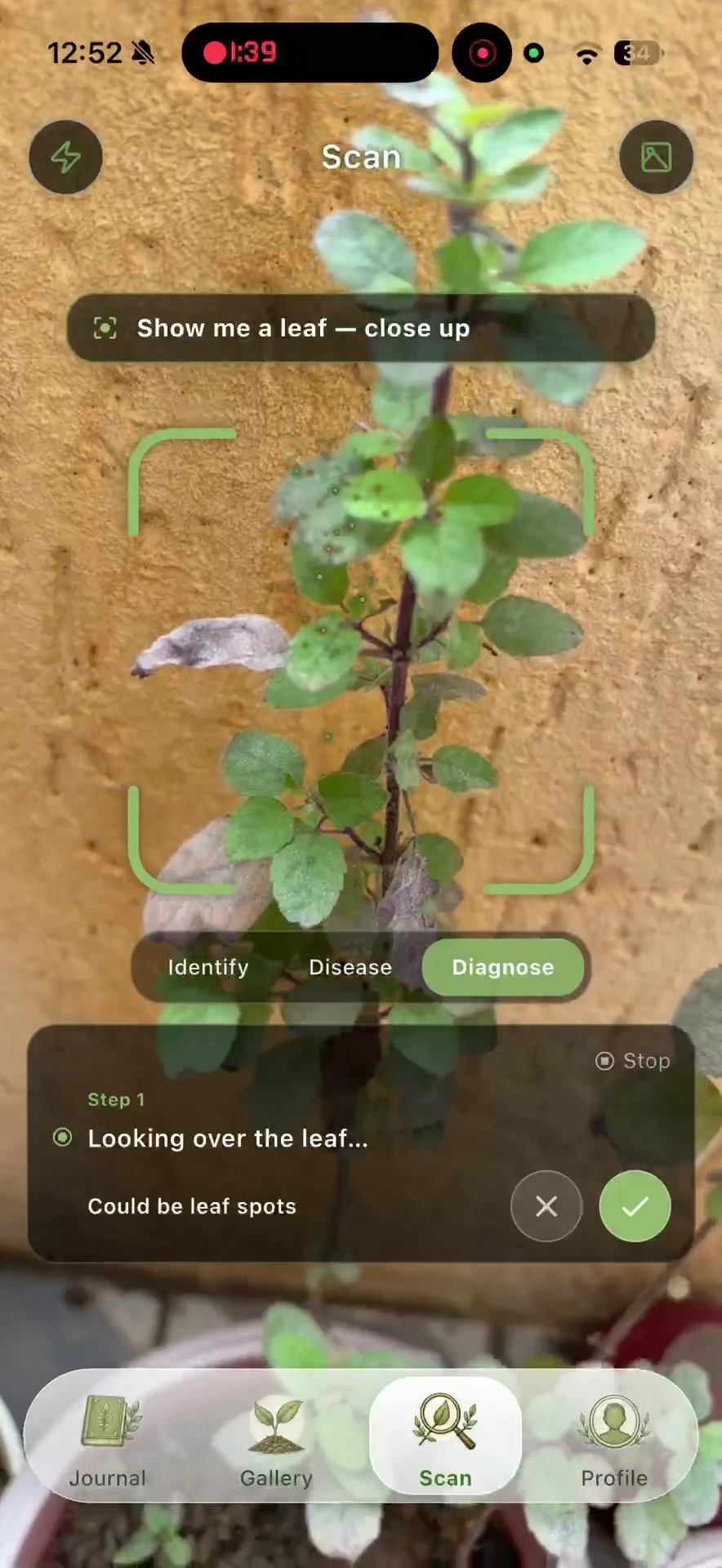
00:40 in the original recording: the app proposes “Could be leaf spots.” This is a suggested observation, not confirmation of a fungal or bacterial infection.
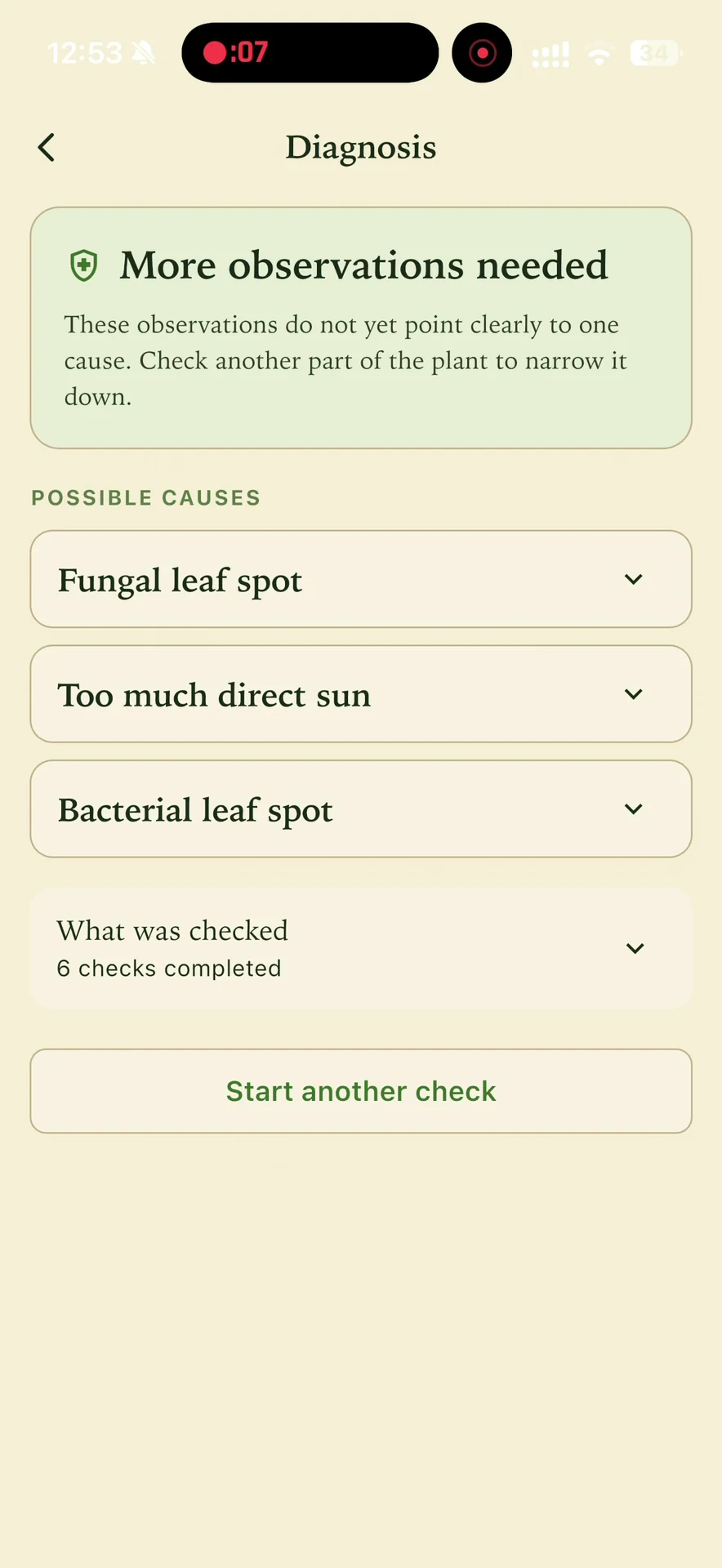
01:08: “More observations needed.” The possible causes shown are fungal leaf spot, too much direct sun and bacterial leaf spot. None is established as the cause.
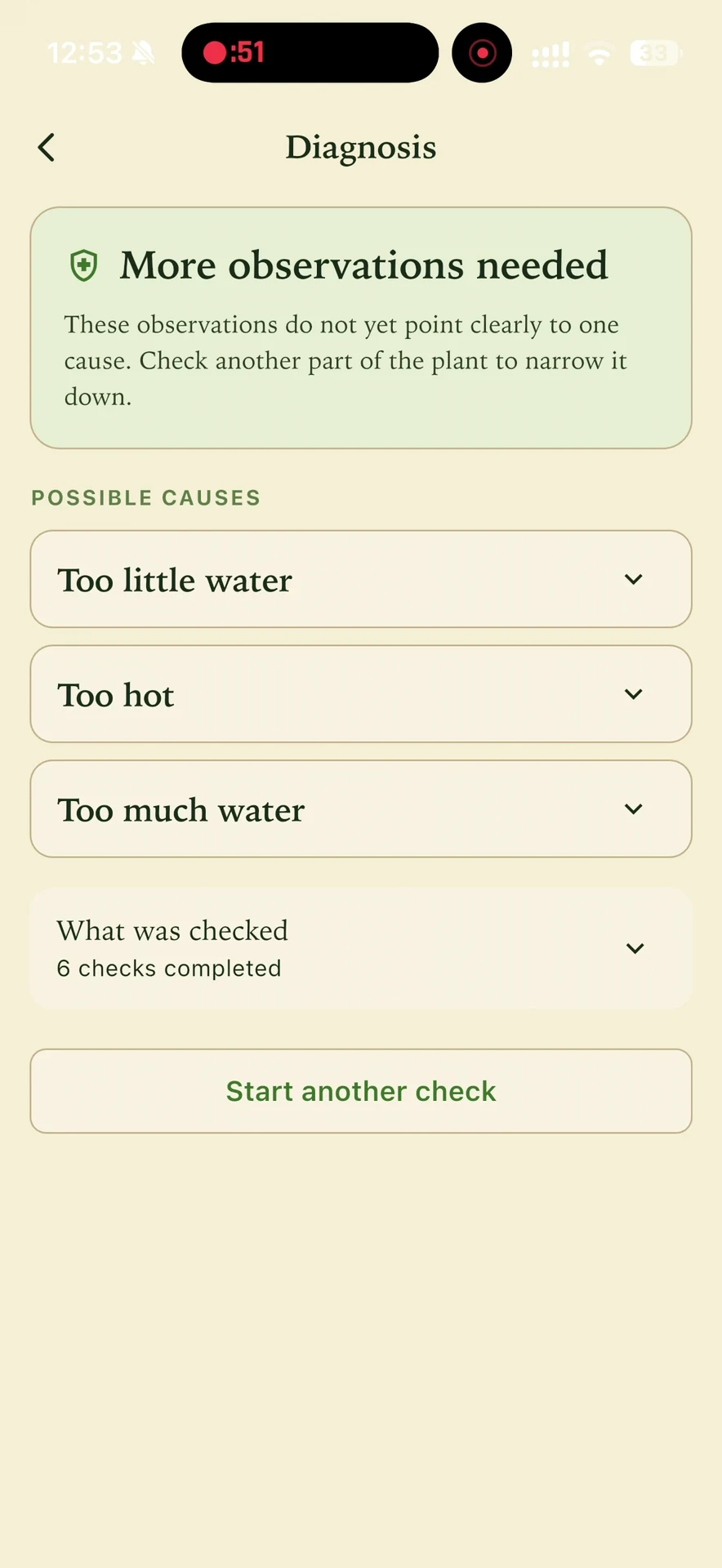
01:52: another check remains inconclusive, now listing too little water, too hot and too much water. We include both results so the changing suggestions are visible.
Different camera views and answers can change the suggestions. The recording alone cannot tell us why these lists differ, and neither result justifies choosing a treatment. In particular, a view of the soil surface does not measure moisture around the roots. The clip also does not show whether a coating wipes off or feels sticky, so we cannot label this a sooty-mould case.
Use the screenshots as a walkthrough of an investigation that remained open. They are not a before-and-after comparison or evidence of a successful treatment. Keep the physical checks and the plant's care history alongside any app output.
A useful record for the next check
Note the date, which leaves are affected, whether the surface is sticky, visible insects, moisture in the pot, and any recent treatments. Retake the same views so that “worse” means observable new damage rather than a different photograph.
SASYA's offline leaf health check and journal can help organise that investigation, but an app result cannot confirm the organism behind a spot. For yellowing without black patches, our money-plant checklist illustrates why moisture and root observations matter.
By SASYA. Prepared 12 November 2026. A source-based observation guide with original app-walkthrough screenshots, not a laboratory diagnosis or a tulsi treatment trial. The linked sources distinguish holy-basil growing requirements, general sooty-mould biology and symptom guidance from other basil contexts.
General guidance for home growers — always follow product labels and local regulations before using any treatment.
Check your plant with SASYA
Explore possible plant matches, check visible leaf symptoms and keep private field notes — on-device, offline and free.