
Araceae
Arum family
The arum family of monocots, including many popular houseplants (Monstera, Philodendron, Dieffenbachia) and important foods (taro, Colocasia). Inflorescence is a fleshy spike (spadix) enclosed in a large bract (spathe). Many produce calcium oxalate crystals causing irritation.
Browse all 36 species ↓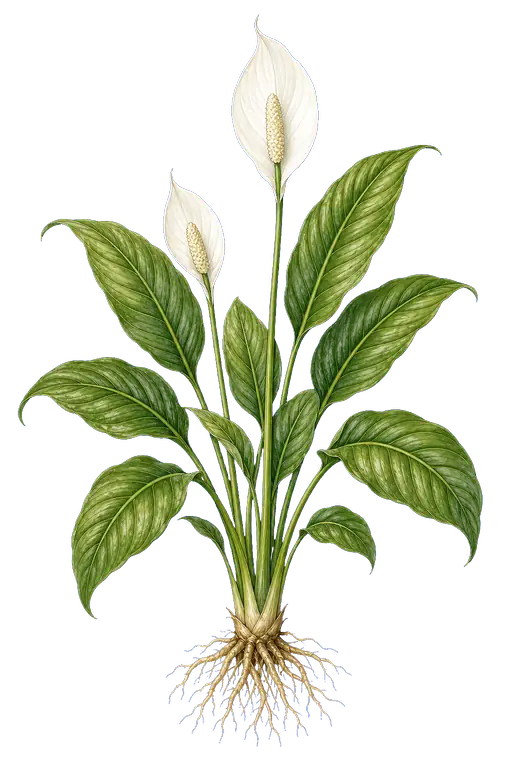
Tiny flowers packed onto a fleshy central spike, usually wrapped in a single large, often colourful bract.
Many species carry needle-like calcium oxalate crystals in their tissue, which irritate the mouth and throat if chewed raw.
Which Araceae species is this?
Answer what you can see and narrow it down to a single Araceae species.
How to recognise the Araceae family
- 01
Spadix inflorescence with spathe bract
- 02
Calcium oxalate raphides; often toxic raw
- 03
Monocot; often large net-veined leaves
To check whether a plant belongs to Araceae, compare the leaf arrangement, leaf type, flower symmetry, fruit type, and one distinctive marker together. A single feature can mislead; the family pattern is the combination.
Learn the full family-identification methodTypical leaf characters
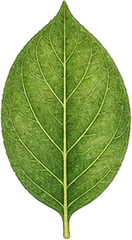
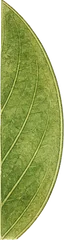
Characters typical of the family — individual species can vary.
Typical flower & fruit
- Flower symmetryVariable
- InflorescenceSpike
- FruitVariable
Typical of the family — flowering plants only; species can vary.
Notable members
Families that can look similar
Hydrocharitaceae
Compare against Hydrocharitaceae when the plant shares similar leaves, flowers, or fruit. Confirm by checking the full family pattern.
Compare HydrocharitaceaeAlismataceae
Compare against Alismataceae when the plant shares similar leaves, flowers, or fruit. Confirm by checking the full family pattern.
Compare AlismataceaeAponogetonaceae
Compare against Aponogetonaceae when the plant shares similar leaves, flowers, or fruit. Confirm by checking the full family pattern.
Compare AponogetonaceaeLemnaceae
Compare against Lemnaceae when the plant shares similar leaves, flowers, or fruit. Confirm by checking the full family pattern.
Compare LemnaceaeAll 36 species in ARACEAE
- Sweet Flag, Sweet RootAcorus calamus
- Chinese EvergreenAglaonema commutatum
- Giant TaroAlocasia macrorrhizos
- Devil's TongueAmorphophallus bulbifer
- Dragon Stalk YamAmorphophallus commutatus
- Elephant Foot YamAmorphophallus paeoniifolius
- Wight's Twisted ArumAnaphyllum wightii
- Painter's-PaletteAnthurium andraeanum
- Shield Leaf AriopsisAriopsis peltata
- Kerala Cobra LilyArisaema leschenaultii
- Murray's Cobra LilyArisaema murrayi
- Whipcord Cobra LilyArisaema tortuosum
- Whipcord Cobra LilyArisaema tortuosum var. neglectum
- Heart Of JesusCaladium bicolor
- Taro, Cocoyam, Wild TaroColocasia esculenta
- TuftrootDieffenbachia picta
- TuftrootDieffenbachia seguine
- Golden PothosEpipremnum aureum
- Dragon-TailEpipremnum pinnatum
- Malayan SwordLagenandra ovata
- Spiny LasiaLasia spinosa
- Split Leaf PhilodendronMonstera deliciosa
- Nile Cabbage, Water Lettuce, Water Bonnets, Tropical Duck-WeedPistia stratiotes
- Climbing AroidPothos scandens
- Hitchhiker Elephant EarRemusatia vivipara
- Voodoo LilySauromatum venosum
- Peace LilySpathiphyllum wallisii
- Goosefoot-PlantSyngonium podophyllum
- Dwarf Voodoo LilyTyphonium roxburghii
- Arrowleaf Elephant's EarXanthosoma sagittifolium
- Arum LilyZantedeschia aethiopica
- Amorphophallus konkanensis
- Cryptocoryne cognatoides
- Lagenandra toxicaria
- Sauromatum pedatum
- Typhonium flagelliforme
Identify any Araceae plant in seconds
Point your camera and SASYA names the species on-device — offline and private.
Download SASYA — Free