Ranunculaceae
Buttercup/Crowfoot family
Herbs with many free stamens and carpels (primitive). Often contain alkaloids and are toxic. Includes buttercup, anemone, clematis, and aconitum (monk's hood).
Browse all 12 species ↓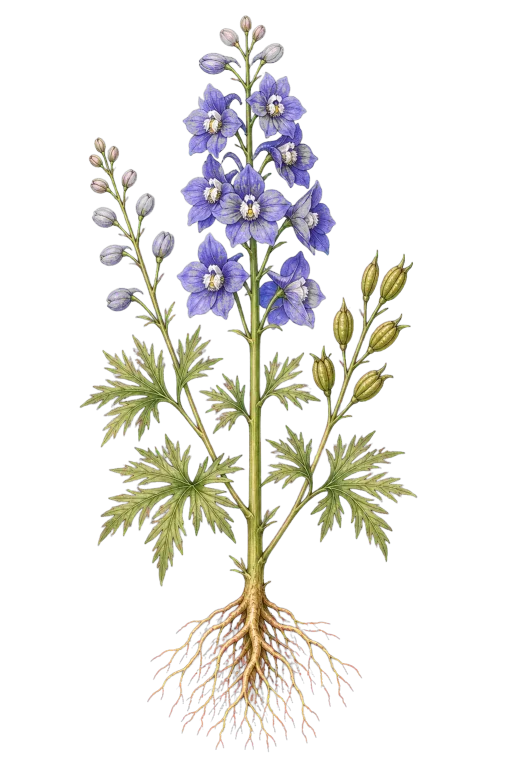
Alternate or basal, often deeply lobed leaves on herbs with an unusually 'primitive', unfused floral plan — numerous separate stamens and separate carpels arranged in a spiral rather than fused whorls — commonly storing toxic alkaloids.
Many genera (aconite/monkshood, larkspur, buttercup) rank among the most poisonous plants in their region, protected by potent alkaloids that affect the heart and nervous system.
Which Ranunculaceae species is this?
Answer what you can see and narrow it down to a single Ranunculaceae species.
How to recognise the Ranunculaceae family
- 01
Leaf arrangement: alternate/opposite
- 02
Leaf type: simple/compound
- 03
Growth forms: herb
- 04
Inflorescence: cymose/solitary/raceme
- 05
Fruit: achene/follicle
To check whether a plant belongs to Ranunculaceae, compare the leaf arrangement, leaf type, flower symmetry, fruit type, and one distinctive marker together. A single feature can mislead; the family pattern is the combination.
Learn the full family-identification methodTypical leaf characters
- ArrangementVariable
- TypeVariable
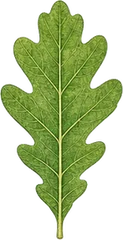 MarginLobed
- VenationVariable
Characters typical of the family — individual species can vary.
Typical flower & fruit
- Flower symmetryZygomorphic (bilaterally symmetrical)
- InflorescencePanicle
- FruitBerry
Typical of the family — flowering plants only; species can vary.
Notable members
Families that can look similar
Berberidaceae
Compare against Berberidaceae when the plant shares similar leaves, flowers, or fruit. Confirm by checking the full family pattern.
Compare BerberidaceaeFumariaceae
Compare against Fumariaceae when the plant shares similar leaves, flowers, or fruit. Confirm by checking the full family pattern.
Compare FumariaceaeLythraceae
Compare against Lythraceae when the plant shares similar leaves, flowers, or fruit. Confirm by checking the full family pattern.
Compare LythraceaeGesneriaceae
Compare against Gesneriaceae when the plant shares similar leaves, flowers, or fruit. Confirm by checking the full family pattern.
Compare GesneriaceaeAll 12 species in RANUNCULACEAE
- Goat's BeardClematis gouriana
- Burman ClematisClematis hedysarifolia
- Autumn ClematisClematis terniflora
- Deccan ClematisClematis triloba
- Lax-Flowered ClematisClematis wightiana
- Rocket LarkspurDelphinium ajacis
- Malabar DelphiniumDelphinium malabaricum var. malabaricum
- Ceylon ClematisNaravelia zeylanica
- Nilgiri ButtercupRanunculus wallichianus
- Hill Meadow RueThalictrum dalzellii
- Clematis smilacifolia
- Thalictrum javanicum
Identify any Ranunculaceae plant in seconds
Point your camera and SASYA names the species on-device — offline and private.
Download SASYA — Free